
I think we’ve all found ourselves sitting across from a GP who looks over our blood test results, smiles, and sweetly says,“Great news, everything is normal. You’re absolutely fine!” But inside of your own skin, you know wholeheartedly that you’re not. You feel the relentless, bone-deep chronic pain, hypermobile joints protesting at every step, and the invisible battle of living in a body that feels like it’s holding itself together with nothing more than rubber bands and sheer willpower.
For years, I’ve navigated life with hypermobile Ehlers-Danlos syndrome (hEDS), which is a rare connective tissue disorder that affects not just me, but my children too, meaning their futures, health, and comfort are forever tied up in this invisible battle. And for years, my reality has been met with blank stares, skepticism, and outright medical gaslighting as doctors google Ehlers Danlos Syndrome on their computer in front of me, asking for the spelling.
When doctors don’t understand a specific condition, it’s far too easy for them to make you feel like the symptoms that you have are all in your head or entirely insignificant to your daily life. When in reality it’s taken so much just for you to even book a doctors appointment, let alone be turned away and told that you’re just stressed out, tired or hormonal and everything is fine.
The reality is, I am far from alone. While the rarer subtypes of Ehlers-Danlos syndrome affect fewer than 1 in 5,000 people, broader UK primary care data and parliamentary estimates indicate that between 135,000 and 300,000 people across the UK are living with EDS and related hypermobility spectrum disorders, with recent UK primary care studies suggesting roughly 4 in 1,000 people carry a diagnosed form of symptomatic hypermobility. When you factor in the thousands still stuck in diagnostic limbo, it becomes undeniable that this isn’t just a handful of isolated cases. It is a massive, underserved community waiting to be heard.
As I approach my 40th birthday next year, I have come to realise something incredibly liberating: If you want something done right, sometimes you have to do it yourself. Just because I look able-bodied and smile through my pain to not concern or inconvenience others, doesn’t mean that my conditions don’t exist or that I’m not suffering.
It is easy to hold a certain amount of sympathy for general practitioners, who are tasked with being medical generalists expected to navigate an overwhelming ocean of complex, overlapping conditions with very limited time and resources. They aren’t geneticists or connective tissue specialists, and the sheer breadth of what they see daily is undoubtedly immense.
Yet, understanding their structural limitations doesn’t soften the heavy personal toll of the diagnostic journey as a patient. When you are living with relentless chronic pain and navigating a body that feels like it’s failing, the road to answers is often agonisingly slow, fragmented, and profoundly lonely. You repeat yourself over and over again, to each member of staff, only to be met with blank stares and confusion rather than progress or understanding.
Being bounced between dismissive appointments, left without any actionable advice, and forced to fight for even basic validation isn’t just frustrating, it is actively detrimental to mental health and emotional wellbeing. Living in limbo without a name for your constant suffering chips away at your spirit, turning the daily act of simply surviving into an exhausting psychological battle. The diagnostic system as a whole is failing, terrible.
If You Can’t Beat Them, Join Them…And Then Teach Them
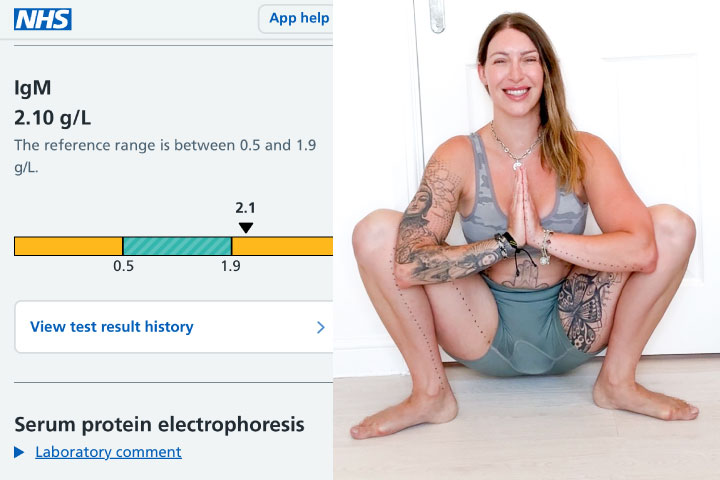
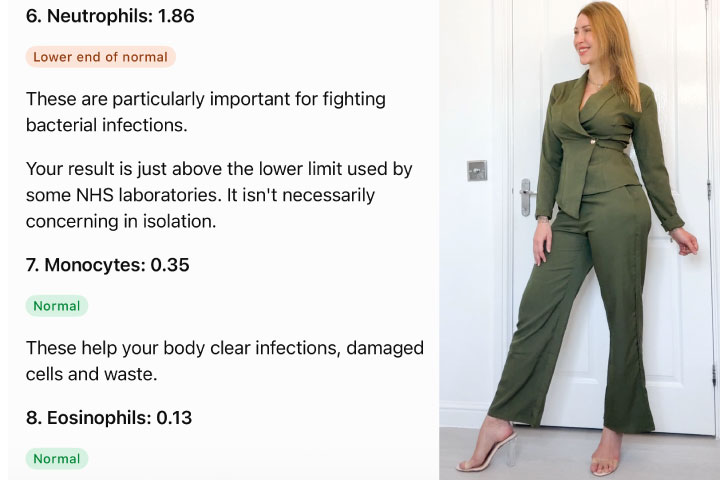
When I started diving deeper into my health, using AI to translate my full blood count, kidney and liver panels, and complement proteins like C3 and C4 with the help of tools to formulate better questions for my doctor, I quickly realised that being told I’m “normal” doesn’t mean my questions have been answered. It just means that the standard reference range doesn’t have the vocabulary for our lived experiences.
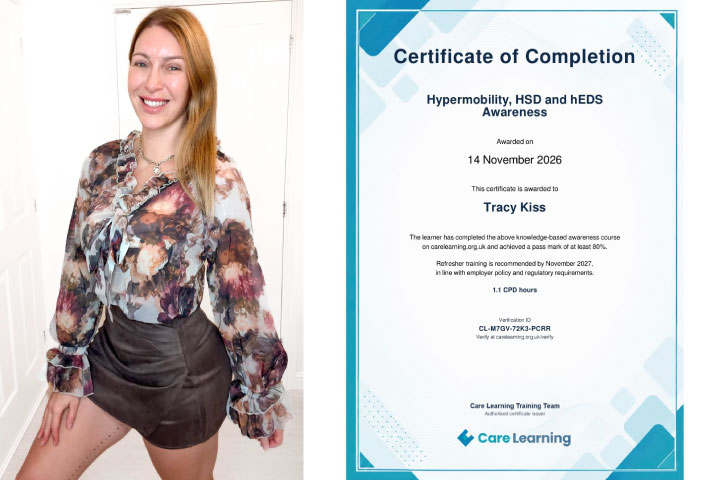
So, I decided to change the playbook and instead of waiting for a healthcare system to catch up, I enrolled in formal training myself. I recently completed a Hypermobility, HSD and hEDS Awareness Training Course and earned my certification.
Why should I study what the doctors study? Because if they don’t understand my reality, I wanted to see what they are actually taught, and more importantly, where the gaps are and why it’s failing. By studying the exact curriculum healthcare providers use, I can meet them on their own ground, speak to them in their language, and gently guide them towards a greater understanding in order to help their future patients who present with the same symptoms as I. I’m effectively stepping behind the curtain to help them from the inside, as a patient.
A Legacy Of Healing For The Next Generation
This isn’t just about my own chart or fighting for my own validation. My children also share the same loose connective tissue disorder as I, as it’s hereditary. They will need to live in a world that understands hEDS, supports their joints, and believes their symptoms when reporting them without hesitation or gaslighting throughout their lives entire lives as I’ve experienced.
My life goal as I approach 40 is to help those who suffer in silence to finally have a voice. By sharing my own health journey, breaking down complex blood markers, and learning how to bridge the communication gap with medical professionals and patients, I hope to clear a path for others. No more running around in circles or being dismissed as difficult. No more searching for a doctor who has actually heard of EDS. Just a direct, informed route to diagnosis and support.
We all know our bodies best, because we live in them every second of every day. It’s time that we stop feeling like outsiders in our own healthcare, and start steering the conversation towards .
While hypermobile Ehlers-Danlos syndrome (hEDS) is fundamentally a connective tissue disorder rather than a standard blood or autoimmune disease, understanding the broader investigative toolkit can empower patients to ask targeted, informed questions during clinical appointments.
The Beighton Score & Clinical Diagnostic Frameworks
Unlike many conditions diagnosed by a single blood test, hEDS is diagnosed through a strict clinical evaluation because its specific genetic marker has not yet been isolated. Clinicians typically utilise:
- The Beighton Scoring System: A 9-point physical assessment measuring joint hypermobility across the fingers, thumbs, elbows, knees, and spine. In adults, a score of 5 or higher is often considered a positive indicator of generalized joint hypermobility, though age and biological sex are factored into the threshold.
- The Comprehensive Diagnostic Criteria: A multi-step framework that evaluates not just joint laxity, but also systemic features such as skin hyperextensibility, unexplained striae, soft tissue scarring, joint instability, and a chronic, widespread musculoskeletal pain history lasting at least three months, alongside the careful exclusion of other autoimmune, rheumatologic, or heritable disorders.
Blood Markers, Immune Panels & Nutritional Screens
Because hEDS and associated overlapping conditions such as immune dysregulation, fatigue-related drivers, or nutritional deficits common in malabsorption and gastrointestinal overlap, it can present complex symptoms and patients often request a wider investigative blood panel. Key markers to discuss with your GP include:
- Nutritional and Metabolic Profiles: Check ferritin, serum iron, vitamin B12, folate, and vitamin D. Chronic fatigue and widespread pain can sometimes be compounded or masked by deficiencies in these core areas.
- Thyroid Function Tests: Assess TSH, Free T3, and Free T4, as thyroid imbalances can mimic or worsen fatigue, widespread muscle aches, and metabolic sluggishness.
- Complement and Immune Panels: Investigate baseline immune markers such as C3 and C4 complement proteins, as emerging research explores how complement consumption and mild immune dysregulation may intersect with multisystemic symptoms in connective tissue disorders.
- Inflammatory Markers: Standard markers like CRP (C-Reactive Protein) and ESR (Erythrocyte Sedimentation Rate) are primarily used to help rule out active inflammatory arthritis or autoimmune rheumatic diseases, ensuring that symptoms aren’t misattributed or overlooked.
Armed with an understanding of these criteria and markers, we can transition from feeling dismissed and unheard to steering an informed, collaborative dialogue with their healthcare providers, regardless of their experience with connective tissue disorders.
From a mother’s perspective, this journey goes far beyond chasing a label; it is about demanding truth, accountability and justice in healthcare. Knowing that my children share this same genetic connective tissue disorder means I cannot afford to stay quiet or accept dismissive shrugs any longer. They deserve to grow up in a medical system where their pain is believed, their joints are protected, and their symptoms are met with informed, compassionate care rather than skepticism. Every patient deserves to be listened to and properly supported, regardless of how complex or rare their condition is perceived to be.
