
As a model, mother and bodybuilder, I’ve spent a lot of my life thinking about what it really means to be a woman. Not simply what we’re told a woman should look like, how we should behave in public, or what we should want, but what it actually feels like to live inside a female body throughout all of the different chapters of our life. Cue my new book, The Art Of Being A Woman: Reclaiming Your Body, Femininity & Desire by Tracy Kiss.
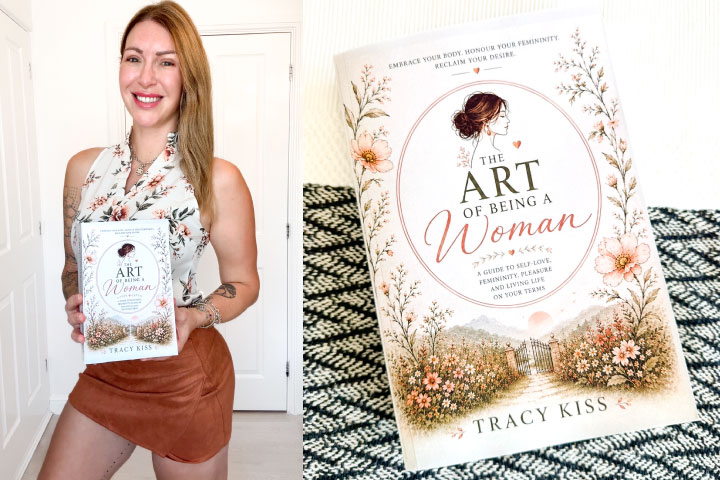
The more that I talk to women, the more I realise how many of us are quietly, and constantly negotiating with ourselves. We look in the mirror and wonder whether we’re attractive enough. We compare our bodies with other women’s. We worry about ageing, motherhood, weight, wrinkles, breasts, scars and our ever-changing skin with time. We hide ourselves beneath restrictive clothing, turn the lights off during intimacy and sometimes become so disconnected from our own bodies that we forget what it feels like to simply enjoy being in them.
That is why I wanted to write The Art of Being a Woman. This isn’t a book about becoming the perfect woman, but instead questioning the expectations that we’ve inherited from relatives and society, to give ourselves permission to decide what being a woman means for us.
I’ve never felt like the stereotypical feminine woman, despite being a model for the past twenty years and celebrated on the front cover of many magazines, on television and social media with millions of followers from across the world. And one of the reasons that this subject is particularly personal to me, is that I’ve never naturally fitted the stereotypical idea of femininity.
As an autistic woman, I’ve often gravitated towards being a tomboy. I’ve always enjoyed sport, movement and practicality, and I’ve never particularly cared whether something was traditionally considered girly, fashionable or desirable. Pink wasn’t my colour and I’ve never felt the need to conform simply because something was labelled as feminine.
Yet I’ve often been presented as an archetypal feminine woman as I have long legs, blonde hair and blue eyes and have been a model for twenty years now. This extreme contradiction in how I’m seen by others as a woman, and how I actually feel as a women, has taught me something vitally important; femininity isn’t one thing.
You can be feminine without wearing the colour pink. You can be feminine while loving lifting weights. You can be feminine without wanting to wear any make-up, or while wearing a full face of it. You can be feminine in a dress, a suit or your favourite pair of trainers.
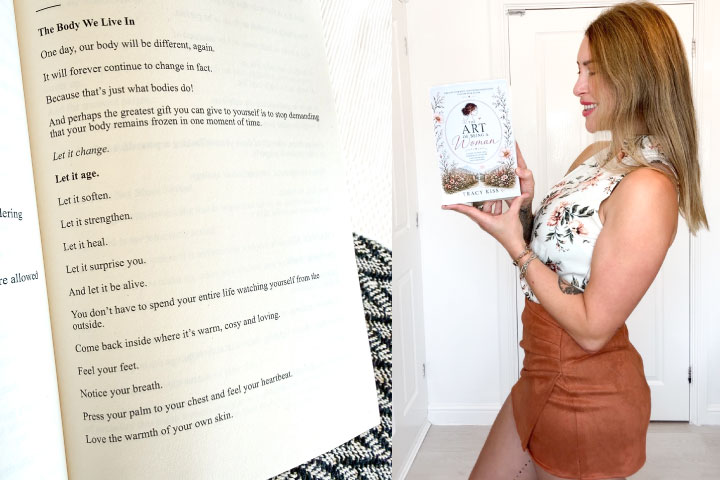
You can be soft and strong, sporty and sensual, shy and confident all at the very same time! And you can change your mind today or tomorrow and be the exact opposite, still whilst being a woman.
I wanted to question who decided what being beautiful actually looks like…
So I welcome you to explore beauty throughout history and across different cultures with me, as well as ideas of beauty and femininity which have varied enormously. How the features, body shapes, clothing and behaviours celebrated in one society may be completely different somewhere else.
I feel that we are constantly surrounded by messages telling us what to improve, conceal, lift, smooth, shrink and preserve. But what happens when you genuinely don’t like something that you’re told to enjoy as a woman?
There is also a huge difference between wanting to care for, or change something about yourself, and believing that you are fundamentally inadequate because an imperfection exists. I want women to understand that motherhood doesn’t erase their womanhood. Whilst it can completely rearrange your identity, and suddenly everyone needs something from you, it’s easy to forget there is still a woman underneath the role.
Wanting the same things that you enjoyed and celebrated before childbirth doesn’t make you a bad mother, because parenting isn’t the entirety of who we are, it’s simply another string to our bow. And the same applies to ageing. Women are constantly encouraged to fear getting older. We’re told to hide our grey hair and freeze any, and all, movement on our faces. But there is nothing wrong with enjoying those things about yourself if they make you happy, because I don’t want women to believe that ageing itself is a failure. It’s a blessing to grow old.
Our face changes with time because we have lived. Our body changes, just as our hormones, priorities and identity changes throughout our entire life. And none of this means that our life, sexuality or desirability has ended. We are not disappearing, we are simply becoming.
And yes, I also wanted to talk about sex in this book, because female sexuality had to be part of this book. We are told relentlessly how our bodies should look to others, yet comparatively very little is said about how we should actually feel.
There are women who have never explored their own bodies, women who have never experienced an orgasm, women who believe that they are failing because penetration alone doesn’t bring them to orgasm, and women who avoid intimacy altogether because they’re worried about how their body looks with the lights on.
I really wanted to approach pleasure in this book without any shame or sensationalism, because sexuality is a natural and healthy part of being human. And pleasure certainly doesn’t mean performing for someone else, or repeating what you see in movies and adult video clips online.
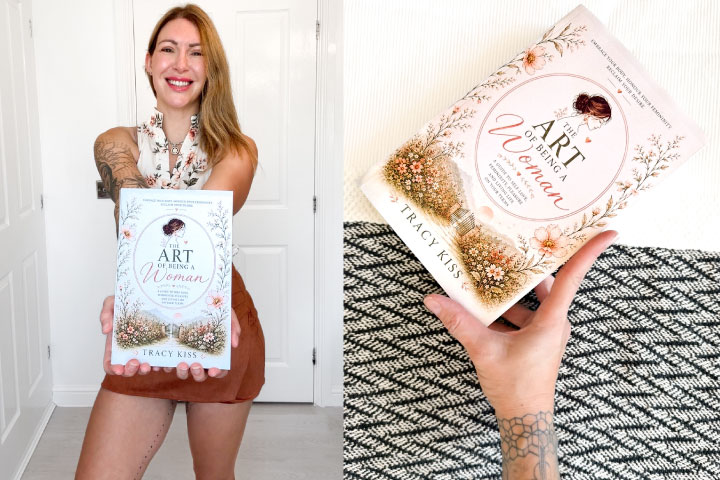
I want women of all ages to finally become comfortable in their own body. To learn what they enjoy and understand about their own unique responses. So I deep dive into the importance of communicating openly and honestly with a partner to make each other feel safe, wanted, connected and understood.
I also wanted women to finally see themselves. Not through a flattering filter or in a carefully chosen outfit, glammed up with perfect lighting. Just naturally, and realistically as they truly are. I want women to feel safe, heard and seen without feeling like they have to transform themselves into somebody else entirely, in order to feel attractive. So I explore how to truly see yourself without criticism.
I’ve had surgery myself, made aesthetic changes to my appearance as well as having many tattoos and piercings, and I don’t believe that wanting to change something automatically means that you hate yourself and are seeking beauty through enhancements.
Sometimes we want to restore something from our youth, balance an asymmetry., reclaim an area of our body that changed through pregnancy, breastfeeding, ageing or life in general. And sometimes we simply want to decorate ourselves with beautiful jewellery and artwork. You don’t have to hate yourself, or have to feel ugly, to want to change your hair colour or buy yourself a new dress. Change and growth can come from a place of self love and acceptance rather than pure selfishness or insecurity.
Ultimately, I want women to stop waiting to be chosen or celebrated, because life shouldn’t have to remain on pause until somebody else arrives to complete you or make you feel worthy.
I don’t want women to finish this book thinking: “Now I need to become more feminine.” I hope they finish it knowing that they are allowed to decide what femininity means to them. I hope that a woman who hates her body becomes a little kinder towards herself, a mother remembers that she is still a woman, an older woman stops believing that she has become invisible, a young woman questions the beauty standards that she’s inherited and someone struggling with intimacy discovers that pleasure doesn’t need to be shameful or reserved only for men.
I hope that those in a relationship may discover their communication can be far more powerful than any performance, and single women realise they’re not lacking or unworthy of love.
I chose the word reclaiming within the title for my book, because I don’t believe that we’re creating a new woman on this journey, we’re simply finding the beautiful soul who is already within. And I want women to be playful, sensual, ambitious and curious once more in life.
Mothers, lovers, adventurers, tomboys and feminine all at once, or day by day. This book is ultimately a gentle, guiding hand to help you to come home to yourself and reawaken the woman within. It’s not about fitting into boxes, following trends or becoming the ideal, dream woman. I don’t want women to try to fit into somebody else’s definition of beautiful; please just learn to inhabit your own skin with a little more kindness, curiosity, confidence and joy.
Ultimately, we only get one body, one life and one opportunity to experience all of the strange, wonderful, complicated and messy things that make us all human. And I don’t want women to spend an entire lifetime hiding who they truly are. I want each and every soul to live life freely and to the fullest, for the beautiful blessing that life is.
You can purchase a copy of The Art Of Being A Woman: Reclaiming Your Body, Femininity & Desire by Tracy Kiss available on Kindle or paperback at Amazon here!
