
If you have a dog curled up at your feet right now, just as I do, then please take a second to look at them. Think about the way that their tail taps against the furniture when you walk into the room, the soft weight of their sweet chin resting on your knee as they gaze up at you with big eyes, and the sheer joy that they get from sniffing a patch of grass on a chilly morning walk together.
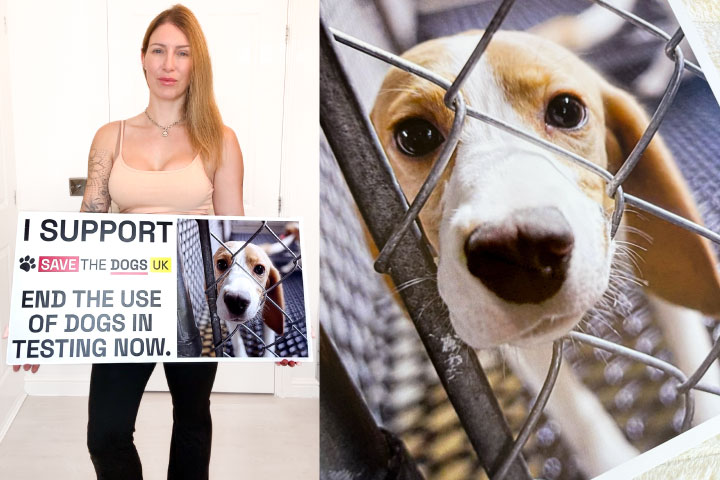
For most of us in Britain, dogs aren’t just animals, they are family too. They are incredibly sensitive, playful, emotional creatures who feel fear, loneliness, and affection just as deeply as we do. Which is why we must be a voice for the thousands of dogs in this country that don’t get soft sofas, long walks, or sweet names. Instead, they live behind locked gates, are deprived of affection and solely bred to be used in laboratory experiments.
When I first heard about Release the Beagles UK, who are also campaigning alongside Save the Dogs UK, I struggled to wrap my head around it. I’m not an activist by nature, and I don’t want to point fingers and make anyone feel guilty or ashamed. Like most people, and pet owners, I assumed that barbaric animal testing on dogs was a relic of the past, or at least tightly regulated in the UK.
Learning the actual reality has been heartbreaking for me, yet strangely, it has also left me feeling deeply hopeful as we are standing on the edge of real, lasting change. And together, we can make that difference a reality.
The Hidden Reality Behind Closed Doors
Every year in Britain, around 2,000 beagles are bred at a facility in Huntingdon, Cambridgeshire, called MBR Acres, which is operated by the multinational company Marshall BioResources (MBR). They use beagles because of the very traits that make them such wonderful family pets; they are so incredibly gentle, trusting, forgiving and small enough to handle easily.
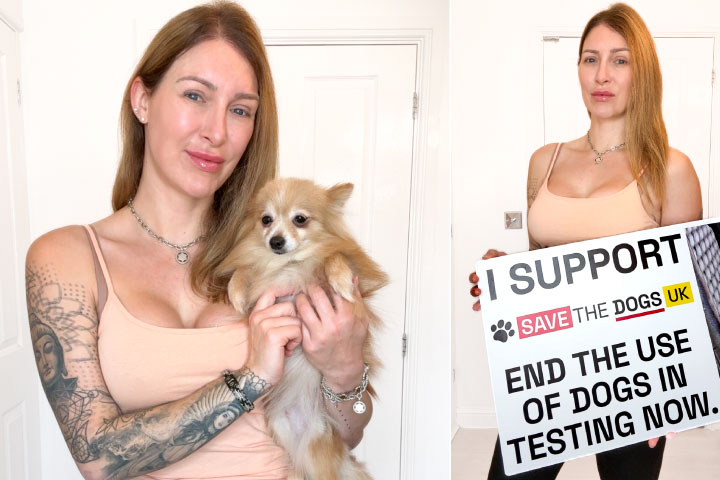
What shocked me most is how different the rules are for these dogs compared to every other dog in the country. If you, or I, wanted to breed dogs in the UK, we would be bound by very strict welfare laws, and rightly so. All dogs must be kept between 10°C and 26°C, mothers cannot be bred before 12 months of age, and they are strictly limited to six litters and two caesareans.
At breeding and testing facilities licensed under the Animals Scientific Procedures Act, those standard breeding protections don’t apply in the same way, and temperature guidelines are merely advisory. During extreme summer heatwaves approaching 40°C, campaigners raised alarm over roughly 1,300 dogs housed inside metal sheds without air conditioning.
According to whistleblower accounts and campaigners monitoring the site, the reality inside of it is worlds away from a loving family home. Beagles have been filmed pacing endlessly and spinning in circles, which is a classic signs of severe stress. They have no outdoor access and hard concrete floors to lay on instead of soft bedding.
Reports suggest that these beloved beagles can be left unattended for up to 20 hours over weekends. And under Home Office licences, the dogs can be bled of up to 15% of their blood up to four times a month, alongside terminal bleeding procedures. This oversight falls to the Animals in Science Regulation Unit (ASRU), which only carries out formal audits roughly once a year, leaving facilities largely to self-regulate the rest of the time.
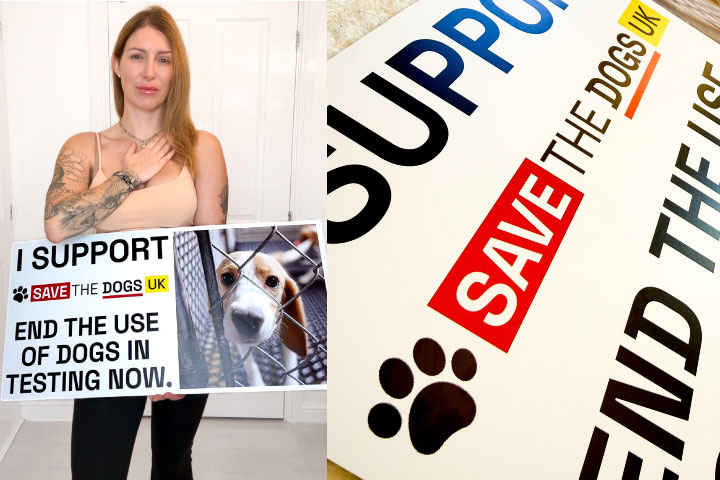
What Happens When The Van Doors Close
At around 16 to 20 weeks old, the exact age when a family puppy would be learning to fetch, teething on toys, and falling asleep on your lap, these young beagles are loaded into vans and driven to laboratories across the UK, some as far away as Scotland. For puppies who have never seen the outside world or ridden in a vehicle before, this journey alone must be terrifying.
Whenever we have driven a family pet home for the very first time, I always have the children in the back of the car to gently stroke and comfort them. We keep the temperature stable, make a nest of blankets and ensure that we remain quiet and calm to ease their nerves.
Once these beloved beagle pups arrive at the labs, shaken and confused, the procedures they face are even more difficult to read about. Depending on the study, puppies may be tethered to flat surfaces with masks fitted onto their face to inhale chemical vapours daily for months; subjected to “oral gavage,” where long plastic tubes are pushed down their throats to pump substances directly into their stomachs. They may also be fitted with surgically implanted intravenous catheters and heavy jackets that continuously pump test chemicals into their bloodstream.
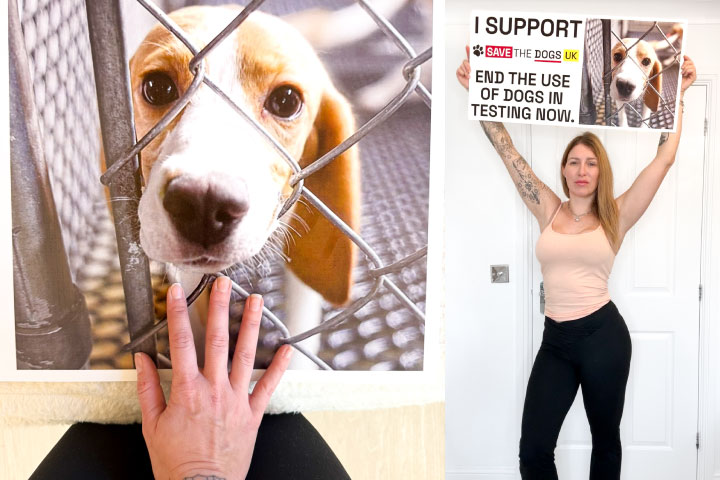
When I picture a confused, sweet gentle beagle enduring this without a single kind word or comforting hand, my heart breaks.These aren’t aggressive or dangerous dogs, they are trusting, innocent companions who still wag their tails at the very people handling them.
Why I Have Hope
It would be easy to feel helpless reading this, especially knowing that despite government pledges to phase out animal testing, experiments on dogs in the UK actually increased by 9% last year. However, looking beyond our borders shows us that huge, historic victories are entirely possible when ordinary people refuse to look away.
Years ago, MBR operated a facility called Green Hill in Brescia, Italy. Following public outcry and judicial investigations into severe welfare failures, including documented evidence of over 6,000 beagle deaths in four years, puppies suffocating after ingesting fine sawdust bedding, and dogs being euthanised with the paralytic drug Tanax without prior anaesthesia, the Italian courts stepped in.
Three senior managers received custodial sentences for unlawful killing and animal cruelty, and the facility was permanently shut down. Shortly after, citing restrictive Italian welfare laws, MBR established operations in the UK.
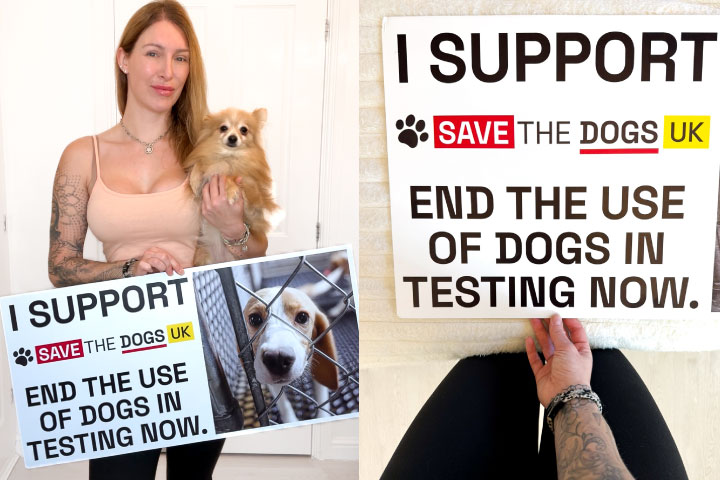
In August 2026, decades of peaceful campaigning in Wisconsin paid off. Faced with regulatory findings of severe welfare failures, including hundreds of unanaesthetised surgeries performed by untrained staff, Ridglan Farm surrendered its commercial breeding licence under a state settlement. In a coordinated rescue effort, 2,115 beagles were saved from the cages and rehomed into loving families. Weeks later, the US introduced the COMPACT Act to modernise biomedical research and end inhumane testing on dogs and cats.
Even now, fresh whistleblower allegations emerging from MBR’s massive New York facility describing extreme cruelty, dogs thrown against cage walls, and agonising euthanasia practices are shining an unforgiving spotlight on the industry worldwide.
Better Science & A Brighter Future
The most encouraging part of all of this is that we don’t have to choose between human health and animal welfare. In fact, modern science is proving that animal testing often holds medical progress back. Because of the biological “species barrier,” drugs that appear safe in dogs frequently fail when tested in humans.
Today, brilliant scientists are pioneering New Approach Methodologies (NAMs) using human-derived organ-on-a-chip technology, advanced AI modelling and human tissue cultures. These methods are faster, cheaper and more accurate for human patients than forcing chemicals into a beagle’s stomach ever could be.

Stand Up For The Voiceless
Release the Beagles UK is a peaceful, grassroots awareness campaign. They aren’t out to shame people or cause chaos, instead they thoughtfully use lawful, relentless democratic tools such as MP pressure, parliamentary motions, regulatory transparency, and public education with three clear goals: to end the use of dogs in UK testing, to champion modern non-animal science, and to safely rehome the MBR beagles.
History shows us that industries only stay in the dark for as long as the public doesn’t know that they exist. In Italy and Wisconsin, ordinary dog lovers spoke up, wrote to their representatives, shared the truth with their friends, and refused to accept cruelty as just the way tthat hings are, and today, thousands of those beagles are sleeping soundly in a warm home with a loving family instead of concrete floors.
We don’t need to be a scientist or a politician to make a big difference. We can all share what we have learned over a cup of tea, sign a parliamentary petition, or write a polite, heartfelt email to our local MP asking why Britain is lagging behind in phasing out dog experiments.
Every single voice matters. When we speak up together for the animals who cannot speak for themselves, we aren’t just fighting for the beagles behind those fences, we are choosing a kinder, smarter future for all of us.
www.savethedogs.uk
Instagram: @savethedogsuk
Tik Tok: @savethedogsuk
