
There are few topics as hotly debated as dietary approaches; from the plant-powered vegan to the meat-focused carnivore, the right way to eat seems to be a source of endless discussion. Yet, despite their fundamental differences, both of these diets share a crucial common ground: the need to consume enough omega-3 fatty acids. So, let’s take a closer look at why this is…
Often hailed as healthy fats, omega-3s are essential for our bodies to function. They are crucial for brain, heart, and eye health, and also play a significant role in reducing inflammation. The main types of omega-3s are:
- ALA (alpha-linolenic acid): An essential fatty acid that our bodies cannot produce, meaning we must get it from our diet.
- EPA (eicosapentaenoic acid) & DHA (docosahexaenoic acid): Long-chain fatty acids that our bodies can convert from ALA, but often not very efficiently.
This is where the unique challenges for vegans and carnivores become clear.
The Vegan’s Omega-3 Journey: From Plant To Power
Vegans primarily get their omega-3s in the form of ALA from plant-based sources. Think nuts and seeds like flaxseeds, chia seeds, and walnuts, as well as oils like canola and hemp seed oil. The body then attempts to convert this ALA into the more readily usable EPA and DHA.
The Challenge: The conversion rate from ALA to EPA and DHA can be very low, often less than 15%. This means that while a vegan diet may be rich in ALA, it doesn’t automatically guarantee sufficient levels of the beneficial long-chain fatty acids.
The Solution:
- Focus on ALA-rich foods: Regularly include ground flaxseeds, chia seeds, and walnuts in the diet. A tablespoon of ground flax or chia seeds can provide more than a day’s worth of ALA.
- Consider a microalgae supplement: Since fish get their omega-3s from consuming microalgae, vegans can go straight to the source. Algae-based supplements provide a direct source of EPA and DHA, bypassing the inefficient conversion process. This is a highly recommended and safe way for vegans like myself to ensure that they meet their omega-3 needs.

The Carnivore’s Omega-3 Quest: Quality Over Quantity
For those on a carnivore diet, the primary sources of omega-3s are animal products, particularly cold-water fatty fish. Fish such as salmon, mackerel, herring, and anchovies are packed with pre-formed EPA and DHA, which the body can use directly.
The Challenge: While the carnivore diet naturally provides the most bioavailable forms of omega-3s, it’s not a given. Many carnivore diets focus heavily on muscle meats such as steak and chicken, which are often not rich sources of omega-3s. Additionally, farmed fish may have lower omega-3 content than their wild-caught counterparts.
The Solution:
- Incorporate fatty fish and seafood: Aim to include fatty fish like salmon, sardines, and mackerel in your diet at least a couple of times a week. Oysters are another excellent source, containing both ALA and the longer-chain forms.
- Choose grass-fed and pastured meats: Grass-fed beef and pastured eggs contain higher levels of omega-3s than conventionally raised animal products, offering a small but important contribution.
- Consider a supplement: If you’re not a fan of fish or struggle to consume it regularly, a high-quality fish oil or krill oil supplement can fill the gap. Look for products that provide a good concentration of both EPA and DHA.
The Bottom Line
Regardless of our dietary philosophy, omega-3s are not a nutrient to be overlooked. Both vegans and carnivores must be mindful and proactive in their consumption.
- For Vegans: A daily serving of ALA-rich seeds is a great start, but a microalgae-based EPA/DHA supplement is the most reliable way to ensure optimal levels.
- For Carnivores: Prioritise fatty, cold-water fish and other seafood. If that’s not feasible, a quality fish oil supplement is a sound choice.
By understanding the unique challenges and solutions of each diet, we can all ensure that our bodies get the essential fats they need to thrive, regardless of our lifestyle.

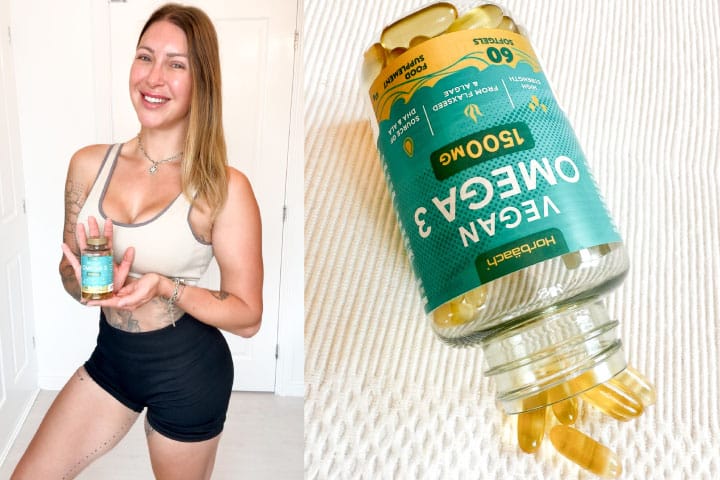
Horbaach Omega 3 Vegan Softgels
A supplement brand that I personally love are Horbaach, and their Omega 3 softgels. As a vegan, taking an Omega 3 supplement is the most effective way for me to make sure that I’m getting enough Omega 3 into my daily diet in order to reap the many health benefits. From preventing muscular degeneration in the eyes to supporting healthy function, it also improves insulin resistance, reduces inflammation, and lowers triglyceride levels, whilst supporting skin health and sensitivities, easing joint pain, depression and anxiety to name but a few benefits.
Their highly innovative formula provides a generous 1500mg of Flaxseed Oil & Algae DHA Oil 450mg Omega-3 ALA & 240mg Omega-3 DHA in easy to swallow sofgel technology. Undergoing rigorous testing, each of their products proudly contain ultimate purity, potency and bioavailability.
I simply take two Vegan Omega 3 softgels daily, with a meal, and carry on with my day, confident that any dietary deficiencies are kept at bay as my body has all of the dietary and supplemented nutrition that it needs to be as fit, healthy and active as possible. What’s not to love about feeling superhuman at any age!
