
Please note: This is an in-depth personal diary of my full surgical journey of having six surgical procedures and my recovery processes; this blog may contain pictures, images and intimate details that some people find disturbing.
Well, that’s quite a gripping title for a blog post, right? And I know it may seem a little extreme or unusual to travel to another country in order to have six surgeries at once, but this is my open and honest journey and I’m sure that it’ll all make perfect sense when I tell you what I’m having done and why. So, let’s start off with the “what” and and work our way up from there shall we?
Surgeries That I Am Having & What It Costs In The UK
I am a strong and healthy biohacking, 38yrs old, vegan, bodybuilder and mother of two teens, and have only ever had private surgery with the worlds best surgeons. I would never consider chasing a cheap deal, nor settle for something local and convenient over travelling any distance in order to be treated by a specialist. I believe in doing something once, and doing it properly, rather than buying cheap and paying twice. Whilst I have a lot of respect for doctors and nurses within the UK, I also understand that prime postcodes and salaries are expensive. In the UK aftercare lasts 24hrs post-surgery at best, where abroad it is typically 7 days, which makes a huge difference after having surgery.
I have had private plastic surgery in Harley Street in London twice, as well as in Hereford in the UK, documented surgery on national television twice, and flown to Spain and Turkey for several other plastic surgeries. I only use 5* surgeons in private hospitals with exceptional healthcare, as I seek the very best results and aftercare, which due to currency conversion, sadly has been driven out of the UK now.
Cold, understaffed and outdated UK private hospitals are not a scratch on the state of the art facilities that are readily available abroad, with an overnight stay post-surgery being dwarfed by a weeks recovery in a warm climate with a full medical team at hand 24/7, daily nurse checks and multiple meetings with the surgeon before returning home from a luxury stay abroad to rest and recover at home. There is simply not the time, space or facilities available in the UK in order to provide sufficient aftercare here, let alone a luxurious experience for prolonged recovery. You’re typically ejected from hospital within 5-24hrs after surgery, only ever seeing your surgeon face to face again if something goes wrong which is mind blowing to me. In comparison, private surgery abroad is absolute luxury, with such high levels of hospitality and exceptional aftercare being the standard if you go to the right surgeon of course.

Born and raised in the UK, I have to admit that we have it totally wrong when it comes to private hospitals and healthcare as a whole, which have been dragged down and overwhelmed over the past several years as a direct side effect of the NHS being crippled, pushing more people to seek private healthcare, with longer waiting lists, less time for appointments and the ever mounting cost of living crisis turning facilities into outdated, poorly managed shells of their former glory. The peeling wallpaper and faded carpets of listed-building hospitals in the UK are no comparison to the chandeliers and pianos within the private new-build hospitals in Turkey. Millions have undoubtedly been spent in both cases, but it goes a lot further abroad, affording far more medical staff, cleaners, concierge and surgeons who pick and choose their patients with a healthy work-life balance, as opposed to the burned out, overworked and severely stressed surgeons of the UK who must also juggle working for the NHS between their own private practice to make ends meet.
So, with that being said, I would choose having surgery abroad absolutely every time that I consider having any kind of surgery at all. Patients fly from all over the world to seek the finest surgeons and experience in Turkey for a reason, and I too am one of those. A general surgeon isn’t a specialist plastic surgeon, just as average service will never compare to excellence. As with any country, holiday or service that you receive, you can have good or bad experiences, dependant on if you seek either luxury or budget. It’s very much a case of doing your research, seeking a specialist in their field and not cutting corners or being lured in by cheap deals in order to avoid unskilled staff, poor practices and sub-standard aftercare. Your recovery post-surgery is just as important as the surgeons work itself, and vital for preventing infections or complications from arising after surgery.

Most people are not prepared for, nor equipped, to change their own dressings at home after surgery, or spot the changes to the skin when symptoms start to occur and can be caught early. When you have a nurse visit to check on you daily, cleaning wounds, changing dressings, helping you to wash and administering pain relief should you need it, you’re far more comfortable, calm and able to enjoy the rest and recovery that is necessary before returning home or going back to work. If you leave the hospital with minimal aftercare, lack in personal hygiene, pull on stitches, or fail to keep a wound clean and dry you can cause a great deal of damage and prolong your recovery.
I know that if I came home the day after having my surgery I would be running around after my children, walking the dogs, doing housework and burning the candle at both ends working without truly resting up. Whereas, when I have surgery abroad I can enjoy the comfort of being waited on and looked after, have no responsibility, no urgency, just pure rest and relaxation at the hospital and hotel with the peace of mind that all is well and taken care of. I look forward to the nurses assisting me to shower and dress to feel well, appreciate being able to speak to and spend time with my surgeon to discuss my recovery, and when mobile, I really enjoy a coffee in the sunshine, spending an afternoon shopping or perhaps a spot of sight seeing. It’s as much a getaway as it is a recovery, and a weeks recovery makes the journey home far more comfortable.

So, now that we’re discussed why I’m leaving the UK to have my surgery, let’s dive into what it is that I’m actually having done. The 6 procedures that I’m having, and their associated costs in the UK are:
- Labiaplasty £5,500
- Vaginoplasty £12,000
- Stress Incontinence Sling £8,000
- Mole Removal x 6 + Histology £3,500
- Wisdom Teeth Removal x 4 £6,500
- Invisalign Teeth Straightening £4,500
Total surgery cost = £41,000
These costs are based upon a reputable private UK surgeon, operating in a private hospital in London with one overnight stay in hospital before returning home. As I’m unable to drive after surgery I always take a taxi home, which is an additional cost on top of this as UK hospitals do not tend to include transfers, which is fully inclusive for surgery abroad, and so it totals £41,000 for the surgery alone in the UK.

I could of course seek a private surgeon and hospital in Wales, Scotland or Ireland which may be less expensive than London. But again, I’m seeking the worlds finest surgeons who do not cut corners or work in cheaper large surgery chains or towns in general. This is typically a stepping stone for surgeons who are still building their private career, and perfecting their skills, whereas I prefer to go straight to the top, to have the best plastic surgeon in their field and achieve the best results without complications. So far, this meticulous research, planning and attention to detail has served me well, and I’ve had many successful, positive and uplifting experiences with surgery which has led me to where I am today. I feel incredibly calm, confident and enthusiastic about having surgery and know that it will improve my quality of life.
My only bad experience of surgery was having PIP Breast implants in Harley Street, London, when I was 18yrs old, and paid £4,000 for private surgery which ruptured at the age of 25yrs because the implants were faulty and have affected over 400,000 patients worldwide. Such a scandal has never happened since, and the surgery itself was a success, but the implant failed due to the manufacturer switching the materials from medical grade to industrial grade after the safety certification was issued. Twenty years later, I could not feel more safe or confident in the choices that I make and the way that the industry now regulates safety testing and certification since this scandal.

I feel passionate about sharing a true and honest account of the surgeries and treatments that I have, in order to allow others to make informed decisions for what is best for them. I believe that it fills in the blanks, and answers the questions concerning what happens between the before and after pictures. Just as I always ask to see previous patients results, before and after pictures and online reviews, I hope that in keeping a surgery diary about my own personal experience, I can shed some light on what professional healthcare and private surgery should look like, what to expect for each surgery and recovery and red flags to spot and avoid in order to stay safe whether you are in the UK or travel abroad for treatment.
So let’s take a closer look at each of the six procedures that I am having in more detail, as I bring you along with me on my journey, every step of the way…
My Consultation With My Surgeon, Prior To Leaving The UK
As my surgeon is based in Istanbul, Turkey, and I live in England, our consultation took place via video call where I was able to discuss my expectations, reasons for wanting surgery and ask as many questions as I could think of about the processes involved.

My surgeon spoke in fluent English, was highly knowledgable, patient and didn’t make me feel rushed or silly for asking obvious or random questions. There is no need for embarrassment when it comes to discussing your intimate health, or any permanent changes that you wish to make to your body through having surgery. We must be fully informed, prepared and accepting of what is and isn’t possible, in order to establish if we are a suitable candidate for surgery, and if it will achieve a realistic and effective result.
My main concern was discussing the changes to my intimate health after childbirth and with age, as it’s not a subject that most women feel comfortable talking about, let alone sharing details. As my labia have regrown after a past surgery, I also wanted to understand if an internal and external vaginal rejuvenation make take place at the same time and the likely results of this. So I will break down the questions that I had, and the answers given, in the following surgical topics from 1-6.
1. Labiaplasty (External Genitalia)
I had a labiaplasty surgery eight years ago in London, and whilst it is intended to be a permanent surgical reduction, the tissue that remains in the labia minora is still active and responsive to bodily changes with time. My labia minora have regrown over a period of eight years which can be attributed to several different factors.
As the tissue of the labia minora is rich in hormone receptors, especially estrogen, any significant changes in hormone levels can cause the tissue to increase in size. This can be triggered by weight fluctuations, pregnancy and childbirth, ageing, menopause, natural tissue stretching, friction, inflammation and swelling. I have stayed a size UK8 my entire life, and not lost or gained any significant amount of weight since having my inital labiaplasty surgery. I had my labiaplasty surgery five years after giving birth to my second child, and have not been pregnant since. I am too young to be affected by the menopause and have not experienced any stretching, swelling or inflammation to the area.
I am however a biohacker, undergoing multiple cellular regeneration treatments for longevity, and it is possible that a part of my body which was surgically removed eight years ago has simply regrown to what it naturally would have been, through the process of tissue repair and growth, as I optimise the health of my entire body. This is therefore the female equivalent of a man being circumcised and his foreskin regrowing. A medical miracle you could say! But alas, here we are.

So, let’s take a closer look at what a labiaplasty is, and why I’m having my second surgery to remove my labia minora. The labia minora is primarily composed of the connective tissue collagen and elastin fibers, blood vessels, and nervous tissue. Many biohacking and regenerative treatments are designed specifically to target these components, whether you have PRP injections, stem cell therapies, topical or systemic growth factors or hormones. When we heal our bodies, and repair them at a cellular level, it’s only natural that everything heals and regrows as nature intended, including the potential for genitalia.
The most likely link here is that the regenerative treatments that I have undergone have been successful in promoting cellular turnover and collagen synthesis throughout my entire boy, having an amplified effect on the highly responsive and vascular tissue of my labia minora. These treatments have essentially encouraged the remaining labial tissue left after my surgery to regenerate and synthesise new connective tissue, leading to a degree of re-enlargement over the past eight years.
The labia minora are the internal part of the female genitalia, encased within the protective labia majora, which are delicate and become chaffed and painful if they protrude. I find it painful to wear underwear or ride a bike once again, due to their length, and have tried non-surgical options to combat this change prior to deciding to undergo a second labiaplasty surgery. I previously had my labia minora surgically shortened to sit within the labia majora, however they have regrown to almost exactly the length that they were pre-surgery. Much like having a trim at the hairdressers, or a male circumcision, the excess tissue is cut away to the desired length in order to increase comfort and protect the delicate genitalia.
My surgeon advised that my labia minora can be once again surgically shortened, but there is a limit as to what amount of tissue can be taken. When I arrive for my face to face consultation in Turkey, he will be able to mark my labia to a suitable length so that we can discuss what amount of reduction is most suitable and safe. I simply wish to be comfortable again, for medical reasons, and have no preference over the appearance. He advised that the recovery for this surgery is 2-3 weeks as there is a lot of blood flow to this area of the body which makes it quick and comfortable to heal after surgery.

Having already had a labiaplasty before I am well aware of what to expect and how my recovery will feel. I plan to pack a couple of books in suitcase so that I can keep my feet up for a few days after surgery and allow the swelling to subside, before adventuring out and about in the local area 3-4 days later.
2. Vaginoplasty (Internal Genitalia)
This is an aspect of the surgery which will be determined by my face to face consultation when I arrive in Turkey. My surgeon advised that he may deem that a non-surgical treatment such as PRP, laser or HA injections may be more suitable than surgery, depending on the internal condition of my vagina which he must examine in person.

The aim of this surgery is to reverse any trauma caused by the natural delivery of both of my children. The tightness and elasticity of the vagina and the strength of the surrounding pelvic floor muscles are dynamic, changing significantly throughout a woman’s life in response to key hormonal and physical life events. I have given birth vaginally twice, without any tears, cuts or stitches required, for which my children are now 13yrs and 18yrs.
As a bodybuilder, I find weight lifting and core exercises have made a very obvious and positive effect on my pelvic floor muscles, but recognise that with age, our intimate bodily tissue naturally changes. And whilst I am already having a labiaplasty surgery, it makes sense to therefore combine these two procedures, focusing internally and externally, in order to restore my body to a pre-motherhood state. These surgeries work hand-in-hand and are often combined for how well they compliment one another for vaginal rejuvenation. But if I am naturally already “tight enough” then a tightening surgery would not be beneficial for me.

My surgeon advised that a width of two fingers is most naturally suitable for tightness, as anything tighter than this may be uncomfortable during intercourse, and there is no universal measure or guide for a woman’s vagina like there is when measuring the length and girth of a mans penis. I therefore cannot know quite how tight I am, or measure progress post-surgery in a specific way. I feel that I am already at a two finger width after having had my children, but I do notice the difference in sensation after going through childbirth, and feel that something has changed from what it was like pre-birth but I can’t put my finger on precisely what. So I’m looking forward to my physical examination to understand what is most suitable to return my body to pre-pregnancy tightness and sensation.
The dominant factor controlling the health, thickness, and elasticity of the vaginal walls throughout a woman’s life is the level of the hormone oestrogen. It’s important to clarify the terms surrounding stretchiness and tightness of the vagina:
- Elasticity/Stretchiness: This is the ability of the vaginal canal tissue to stretch and return to its general shape. The vagina is naturally very elastic, like a strong rubber band, and is designed to accommodate objects like a penis, tampon, or a baby’s head during childbirth.
- Tightness/Laxity: This is less about the vaginal walls themselves and more about the tone and strength of the surrounding muscles, collectively called the Pelvic Floor. During reproductive years and pregnancy, a woman’s oestrogen levels are high with optimal elasticity and thickness which becomes pliable in order to give birth. These oestrogen levels drop during breastfeeding in order to act as a natural contraceptive, causing temporary menopause-like symptoms such as dryness, tightness and shortening. Levels continue to decline around the ages on 45-55+ during the perimenopause and menopause where symptoms reach their peak.
Childbirth is obviously the most significant acute physical stressor on the vagina and pelvic floor muscles which stretch temporarily to allow for birth, before returning to a similar state after healing. The vagina may feel wider whilst healing after birth, but does not remain permanently stretched. The pelvic floor muscles are essentially a hammock which support the bladder, uterus, and vagina. They are stretched, weakened, or even torn by the weight of a baby during pregnancy and the force of pushing during a natural delivery. This is the main cause of the feeling of vaginal looseness at the vaginal entrance and can lead to issues such as urinary incontinence.

The recovery of muscles can take anywhere from a few months to over a year after birth depending on if there have been multiple vaginal deliveries, delivering a large baby, or the use of forceps which can increase the likelihood of lasting muscle weakness and laxity. I personally didn’t notice any difference between tightness between my two births, for which my daughter was 7lbs and my son 8lbs8oz, and attribute pelvic floor exercises to being key to rebuild muscles strength, tone and the feeling of tightness after healing from childbirth. I cannot sing the praises of weightlifting and core exercises enough, as my body returned to a pre-pregnancy state in just a handful of months after having both of my children, which prevented me from experiencing any longterm negative symptoms of being a mother.
As everybody is intimately individual, it’s not always possible to tell if a woman is a mother or not from intercourse alone, as we all have varying depths and widths of the vaginal canal. In my eyes, it’s about feeling happy in your own skin, being free to make choices over your own body, enjoying pleasure and being mindful of intimate health at different stages of life. As I am undergoing an external labiaplasty surgery, it makes sense to do a little internal house-keeping at the same time.

Having just celebrated my 38th birthday, I am well aware of the period leading up to and after menopause -known as erimenopause and post-menopause- sees the most profound and permanent change in the vaginal tissue due to the cessation of oestrogen production by the ovaries. Therefore I have between 7-17yrs before this major shift will happen in my life, and I believe in being fully informed and prepared for it. This change in hormones leads to the the vaginal lining naturally becoming thinner, paler and more fragile with reduced blood flow, less natural lubrication and loss of elasticity. This can lead to friction and pain during intercourse, as well as tearing, bleeding and functional tightness.
And much as a man may face erectile dysfunction, or a lack of libido with age, if you were to offer him a “few more inches added” “more stamina” or “heightened pleasure” I’m sure very few would ever feel the desire to decline. I’ve worked incredibly hard to build a strong and athletic body, to look and feel my very best, and intimate health is just as important as physical and mental health. To restore my vagina to it’s pre-pregnancy state, whilst I am having excess labia minora tissue removed, is simply the cherry on the cake. Should I be a good candidate to have a vaginoplasty surgery, my recover will take 4 weeks before I can return to usual activities such as using tampons, intercourse and exercise. It’s advised that you take 1-2 weeks off of work to rest and recover.

3. Stress Incontinence
Something that is closely related to labiaplasty and vaginoplasty surgeries for women is stress incontinence surgery which is again affected by pregnancy, ageing and hEDS – Hypermobile Ehlers-Danlos Syndrome- which I was diagnosed with this year. You may know it as being “double jointed”.
Hypermobile Ehlers-Danlos Syndrome significantly contributes to stress urinary incontinence (SUI) due to the nature of the syndrome as a connective tissue disorder. The core issue lies in the faulty collagen that characterises hEDS, which leads to weak, overly stretchy, and lax connective tissue throughout the entire body, including the structures that support the bladder and urethra. Such joy!

Stress incontinence is defined as the involuntary leakage of urine during activities that increase intra-abdominal pressure, women of all ages may experience this during coughing, sneezing, laughing, running, jumping or lifting to name but a few examples. It is typically caused by weakened pelvic floor support, pelvic organ prolapse (POP), compensatory muscle tightness (Hypertonicity) in response to passive connective tissues, or tissue fragility. Effectively it is the leakage of urine when muscles are placed under stress, and can happen at any age or stage of life, with or without childbirth.
Fortunately I wasn’t affected by stress incontinence after having my two children, as I was in my twenties at the time and performed pelvic floor exercises after birth, which means that I can still jump on trampolines, lift heavy weights and run. But I’ve had two instances over the past year where I sneezed multiple times with a full bladder, and laughed hysterically at a joke, and felt a small trickle in my underwear whilst making an urgent beeline for the toilet. I’m unsure of it I would have leaked had I not already had a full bladder, but the thought of ever fully wetting myself involuntarily feels incredibly concerning. Knowing that I have hEDS and my symptoms will only worsen with time and age, I’d rather address it now and ensure that my pelvic organs are properly supported to reduce this risk from heightening in time. Stress incontinence is something that affects all women.

Speaking with my surgeon, he advised that I am a suitable candidate for TOT surgery, or Transobturator Tape, which is a safe and common procedure that is used to treat stress urinary incontinence (SUI) in women. He explained that it is a minimally invasive surgical procedure which is designed to provide support to the urethra, which urine passes through, to prevent involuntary urine leakage that occurs with physical exertion.
The surgery involves placing a narrow strip of synthetic mesh tape, which acts like a sling or hammock, underneath the middle part of the urethra. A small incision is made inside of the vagina, just below the urethra, along with very small incisions on the skin in the groin or inner thigh area in order to guide a mesh tape from the vaginal incision out through the groin incisions, passing through the obturator foramen which is an opening in the pelvic bone.

The tape is then positioned tension-free to provide support to the urethra, helping to keep it closed when there is increased pressure in the abdomen, thereby preventing urine from leaking. It is a relatively quick procedure with a high success rate, and by itself allows for a short hospital stay, often as a day case or overnight only. Results are seen quickly within just days of having surgery and a full recovery is made within 2-3 weeks.
4. Mole Removal
I have previously has several moles privately removed, due to them being raised and painfully catching on my clothing and bleeding, as well as being in unfavourable areas on my upper lip and the side of my cheek. The NHS used to offer this service when I was a child, as I had a mole removed on the arch of my foot by my doctor, as it was very large and rubbed and bled when wearing my school shoes, however they no longer routinely remove moles unless it is medically suspicious, due to a lack of resources and funding.

An NHS doctor will therefore not remove moles or other benign -non-cancerous- skin lesions for cosmetic benefit alone, as this is considered a surgical procedure for which resources are reserved for life-saving treatments. If it is not medically necessary, it must be privately removed instead.
The NHS will only remove a mole if it meets specific medical criteria such as becoming a melanoma -a serious form of skin cancer- or if it is frequently bleeding and infected. Whilst I snag my lumpy moles every now and then with a nail, jewellery or hairbrush, it’s not a daily occurrence and more of an inconvenience and discomfort than a medical emergency, and so it makes sense to have my moles removed at the same time as undergoing my other surgery. A little housekeeping if you will.

I do not expect any of my lumpy moles to be sinister, or cancerous, but my surgeon is qualified to check each upon removal to ensure that I am safe and well. The recommendation for self-checking if a mole is safe is known as the ABCDE rule which stands for Asymmetry, Border, Colour, Diameter and Evolving. You should seek medical attention if one half of the mole does not match the other, the edges become irregular, notched or blurred, the colour is uneven with shades of black/brown/tan/white/red/blue, the mole is larger than 6mm or has changed size, shape, colour, texture, itches, bleeds or oozes.
Essentially, my moles meet the NHS criteria of changing in size, becoming lumpy, catching and bleeding, but I prefer visiting a plastic surgeon to have this treatment as they are more skilled in creating an aesthetic end result than a general practitioner who’s purpose is to solely remove the mole, without the concern for minimising scarring. A surgeon specialises in achieving flawless aesthetics, whilst a GP ticks the box for doing a little bit of everything, but specialises in no set thing. It’s a no-brainer to therefore having any unwanted moles removed at the same time as undergoing a planned surgery.
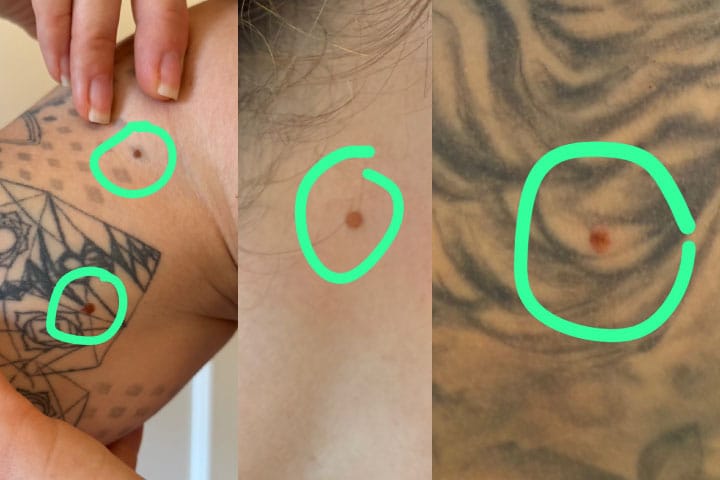
The most common treatment for lumpy moles is the flattening / shave excision approach which involves surgically shaving off the raised part of the mole, commonly with a scalpel, so that it is flat or flush with the surrounding skin. The entire base of the mole is often left intact, meaning it can occasionally re-grow over time, but the immediate problem of catching is solved. I have never had a mole regrow to become lumpy again, and more often than not, the pigmentation of the mole also disappears after it has been flattened, leaving behind naturally clear skin with no scarring.
I do not mind if any of my moles remain brown after being shaved off, as it’s the protrusion that I am concerned about correcting, rather than the appearance of pigmentation on the skin. I have always been awake to have my roles removed, which literally takes minutes, but shall be asleep during my surgery when they are nipped off and a small plaster put over them to heal, just like scraping a knee. It’s a very quick and easy procedure to have and must simply be kept clean and dry like any cut that heals itself within a week or two, with no need for stitches.
5. Preventative Dentistry: Wisdom Teeth Removal
This is possibly the most unexpected surgery that I am having, which I’m sure that not many people may think of when you tell them you’re travelling to Turkey for dentistry. The term “Turkey Teeth” has become notorious in the UK for people who have flown abroad to have veneers and return with a very bright, white and square-toothed smile.
I love my natural teeth, which are all my own, and care for them dearly, brushing religiously day and night, and sometimes in-between, to keep them as healthy and strong as possible. I therefore wish to keep all of my natural teeth for as long as possible, with no intention to add anything superficial or replace what I already have. However, I would like to remove four of my teeth, and those are my wisdom teeth!

Wisdom teeth removal in Turkey!? Why would anybody travel so far for something that a local dentist can do? Well, it’s been a bit of a hot topic for me, and seeing as I’m already coming to Turkey to have surgery, I thought that I would get it all done at once. There can be conflicting opinions when it comes to the wisdom teeth and the criteria for having them removed. I have to say that I am personally a fan of preventative dentistry which many people may never have heard of.
UK dentists operate with a primary goal of preserving our natural teeth, which I fully support, as extraction is generally considered a last resort when a tooth is beyond repair and its retention would be detrimental to overall oral health. The decision to remove a tooth is based on clinical necessity, and the criteria often fall under the following categories:

-Severe and Irreversible Tooth Damage: deep decay, irreparable fractures or trauma, failed restorative treatment or root resorption
-Advanced Gum Disease: severe bone loss where gum disease has destroyed the bone and tissue supporting the teeth, causing them to become loose and irreparable, posing a risk to the adjacent teeth
-Impacted Or Problematic Wisdom Teeth: recurrent infections, untreatable decay, damage to neighbouring teeth, cysts or tumours
-Crowding: part of an orthodontic treatment plan for realignment of teeth
-Infection Risk For Systemic Health: extraction may be necessary prior to certain medical treatments in the head and neck such as radiotherapy, cardiac surgery, severe infections or abscecces which cannot be treated with a root canal, or when taking certain medications like IV bisphosphonates to eliminate any potential sources of infection that could cause a serious systemic complication

Asymptomatic, non-painful and non-diseased wisdom teeth are generally not routinely removed by a dentist, even when requested. Whilst I do not have pain or infections caused by my wisdom teeth at present, I previously had my gum slit to relieve pressure of my wisdom teeth coming through, and have experienced a small amount of gum loss and decay to my wisdom teeth which are notoriously difficult to reach properly when brushing, and as a result of this I wish to remove them before they evidently rot away, get infected or lead to gum disease. Why wait for something to cause you agony and irreparable damage to neighbouring teeth before treating the root cause of the problem? We do not need our wisdom teeth, they do not benefit us at all, and they can only ever cause us trouble in the long run. So it’s my choice to take care of them, before they need to be taken care of.
Having this discussion with my dentist, who rightly advised that I protect and retain my natural teeth at all costs, rather than opting for removal, I was advised to visit the hygienist once or twice per year in order to maintain the health of my wisdom teeth effectively. This comes at the cost of around £200-£300 per year to retain my wisdom teeth that can only get worse with time, rather than improve. At the age of 38yrs, I have had just one filling and have otherwise happy, healthy teeth, but after I noticed a bad taste in my mouth that wouldn’t shift, I asked for clarification of what was causing it, and was informed that my wisdom teeth needed some attention. As they do not hurt or cause me any discomfort, I had never thought of having them removed before, but upon researching preventative dentistry following the unsavoury taste in my mouth, it opened my eyes to an entirely new world of oral healthcare which led me to seek extraction.

Preventative dentistry is based upon the early removal of unnecessary wisdom teeth, before symptoms take place in order to prevent future impact and pain. As wisdom teeth often grow at unusual angles or remain partly trapped under gum or bone, they can often cause pressure, pain or swelling. Wisdom teeth may therefore be removed in late teens to early twenties as a preventative measure before the roots fully develop and surgery becomes more complex and painful.
Removing healthy wisdom teeth also removes the risk of infection, as partially erupted wisdom teeth can leave a flap of gum tissue where bacteria can accumulate, leading to painful infections, swelling and difficulty opening the mouth. Removing wisdom teeth eliminates the bacterial pocket and risk of future infection.
Removing wisdom teeth earlier in life can also help to maintain the alignment of the surrounding teeth, as they can no longer exert pressure through overcrowding and push the surrounding teeth in all different directions – as I’ve experienced. It also lowers the risk of decay and gum disease, as the wisdom teeth are not in an area that is easy to brush or floss, which makes them naturally prone to cavities, gum inflammation and bacteria. Removing wisdom teeth improves overall oral hygiene and lowers the bacterial load in the mouth which for me is a win win scenario.

The younger you are when you remove your wisdom teeth, the less risk there is of experiencing cysts or damage to the jaw. It’s a faster and easier recovery and healing process at a young age, as those in their twenties have softer bones and smaller roots, with fewer post-op complications, as well as a lower chance of nerve injury compared to older adults.
Removing all four wisdom teeth simplifies future dental X-rays, cleanings, and restorative work concerning crowns and implants, as the far back of the jaw remains more accessible and easier to monitor. Removal provides peace of mind and avoidance of dental emergencies as they can flare up suddenly with pain, infection, or swelling at inconvenient times in life, when travel, pregnant, or already experiencing illness. Although many would argue that no time is ideal for a dental emergency and unbearable pain; elective removal prevents such unplanned dental emergencies later on in life, for which the risk only increases.
Modern science has recognised that oral health, gut health, and systemic inflammation are connected, and how bacteria in the mouth from wisdom teeth have a negative effect on our gut microbiome and overall health. The warm, moist, low-oxygen environment in the mouth is ideal for anaerobic bacteria Porphyromonas gingivalis, Fusobacterium nucleatum and Treponema denticola which release toxins and enzymes that break down gum, tissue and bone, as once inflammation begins, it can spread everywhere.

The mouth has an extremely rich blood supply, and when gum tissue is inflamed, microscopic breaks in the gum allow bacteria and inflammatory molecules to enter the bloodstream. This process is called bacteremia which is a transient bacterial presence in the blood. Even mild gum disease can cause repeated, low-level bacteremia during brushing or chewing, which adds up over time. Once this oral bacteria enters the circulation, may undesirable symptoms can occur.
-Impact on the gut microbiome: Oral bacteria such as Fusobacterium nucleatum and P. gingivalis have been found in the intestinal tract, especially in people with gut inflammation surrounding IBS, Crohn’s and ulcerative colitis, disrupts gut flora balance, reducing beneficial species like Lactobacillus and Bifidobacterium. This can trigger intestinal inflammation, contributing to “leaky gut” whilst also leading to biofilm formation and altering immune signalling in the gut
-Immune and inflammatory response: Chronic oral infection keeps the immune system on alert, releasing cytokines (IL-6, TNF-α, CRP) that circulate through the body, aggravating systemic inflammation which has been linked to digestive issues, fatigue, brain fog and autoimmune flares
-Digestive burden: swallowing saliva that continually carries oral bacteria to the gut can alter gut microbial composition and digestion efficiency

When problematic wisdom teeth are removed gum inflammation reduces, sealing off the entry point for bacteria, oral bacterial diversity rebalances, decreasing the flow of harmful microbes to the gut, and many people report the secondary improvements of reduced bloating and digestive discomfort, clearer skin, less systemic fatigue and lowered chronic inflammation as oral-gut microbial harmony is restored.
As somebody who already suffers terribly from IBS and chronic inflammation from hEDS, reducing my risk of oral bacteria is high upon my list of concerns, as I’d rather have preventative dentistry now than wait for my wisdom teeth to potentially rot, to experience years of pain and be left with an even larger and more extensive dental treatment plan that could cost me tenfold to correct additional damage caused to my surrounding healthy teeth and gums.
I’m fully aware that many people would avoid having a wisdom tooth removed at all costs, because of the pain and discomfort of the extraction process, and I may be grossly underestimating the sensation of what is to come in having all four removed at once. But given the advancement of science, and my awareness of preventative dentistry, I simply cannot un-see the many health benefits of having my wisdom teeth removed. I believe that this is a decision that every individual should be allowed to make for themselves at any stage of life, wether their wisdom teeth are causing pain or not, which I recognise is in conflict with traditional dentistry practices in the UK, hence why I am having my extraction in Turkey.

Should you wish to keep hold of your wisdom teeth, and not remove all four in one day as I am, then there are plenty of things that you can do to protect your gums and gut. From having regular professional cleaning and hygiene appointments, to using an antimicrobial mouth rinse, taking probiotics, consuming a plant-rich, anti-inflammatory targeted, low refined sugar diet, and addressing any painful or partially erupted wisdom teeth promptly with your dentist.
As I have hEDS, (Hypermobile) Ehlers-Danlos Syndrome, this will affect my dental treatment as the most significant impact that EDS has on dentistry is resistance to local anaesthetics, meaning that standard doses of drugs are often ineffective, wear off too quickly, or fail to achieve complete numbness for dental procedures. Studies suggest that up to 88% of EDS patients experience inadequate pain prevention during dental procedures, and in the past before my diagnosis I would ask for an additional pain relief injection and still feel everything.
Dental care for EDS patients often requires modified pain management protocols, using higher volumes of local anaesthetic, administering different types of anaesthetic agents, employing nerve blocks instead of simple infiltration, or utilising conscious sedation or even general anaesthesia to ensure a pain-free and safe experience. My dental team are aware of this and have planned my treatment accordingly.
6. Invisalign Teeth Straightening
I had my teeth straightened with adult braces eleven years ago, and failed to wear my retainers to prevent my teeth from shifting out of place. I have since had wires fitted top and bottom to the back of my teeth, as well as sleeping with top and bottom plastic retainers in to keep them in place, but this is maintaining them in their shifted position, and not the perfectly straight alignment that I had them initially moved to with braces.

As a result of this, my lower side teeth have tilted inwards and my top front teeth overlap ever so slightly, which most people wouldn’t ever notice or be concerned about, but feels frustrating to me given the fact that I went through the inconvenience of having adult braces. After I have my wisdom teeth removal, I am then having my Invisalign installed, which is a discreet orthodontic treatment that uses a series of custom-made, clear plastic aligners to gradually straighten the teeth.
An alternative to the traditional fixed braces that I had before, instead of metal brackets and wires it uses a sequence of transparent, removable aligners -or trays- to shift the teeth. Designed to be virtually invisible, each aligner is custom-made for an every individual stage of your alignment journey using advanced 3D scanning and printing technology. The carefully planned, step-by-step treatment process uses gentle, controlled force to move the teeth from their starting point to their desired end position. It allows you to see the anticipated final result for your teeth before the treatment has even started.

The series of custom aligners are worn for 1-2 weeks each, for 20-22hrs per day, with them being removed for eating, drinking or brushing the teeth, in order to provide the maximum amount of wear each day for the minimum amount of treatment time. A check up is then provided in person every 6-8 weeks to monitor progress, with each aligner applying gentle pressure to the teeth when first put on, and gradually loosening as two weeks pass, before the next aligner is progressed.
Small tooth-colour attachments may also be glued to the tooth to allow the aligners to grip and apply specific movements in areas where they are required, which is determined by the scans. Once the treatment is complete, and the aligners no longer have to be worn all day, this marks the end of the active phase of the treatment, however the lifelong phase of retention then begins. A removable retainer or fixed wires must then be used to keep the teeth in their aligned position, otherwise you risk relapse, which is what happened to me.
The periodontal ligaments that hold our teeth in the jawbone have a memory and naturally pull the teeth back to where they started which causes relapse of moved teeth. The jawbone supporting the teeth also needs time to solidify and remodel around the new, correct positions which is a process thatb takes several months, and so the retainer holds the teeth stable as this happens.

Our teeth naturally shift throughout life due to forces from chewing, speaking and the ageing process, meaning that teeth can shift out of alignment in a matter of days or weeks after the active phase of treatment if left unsupported. After a few months of not wearing retainers, noticeable gaps, crowding and crookedness can reappear, effectively undoing the time, effort and cost spent moving the teeth during treatment. The only way to straighten the teeth again is to begin a new active treatment with fixed braces or aligners, which is where I find myself now.
For the past several years I have had wired attached to the back of my teeth as well as nighttime retainers to maintain the position of my moved teeth. As I had fixed braces before to move my teeth, this time I thought I’d try Invisalign as it allows me to remove my aligners to eat and speak on camera for work. My Invisalign treatment will be scanned and fitted in Turkey, with maintenance checks in London by my dentist when I return home.
Beyond The Stigma: Why Intimate Surgery Is An Act Of Self-Care
The decision to undergo these six procedures is a profound act of self-love and not vanity. If anything, I will look no different appearance wise before and after having surgery, but will feel like a new woman because of it. Motherhood taught me to be selfless, but it also taught me that I can only pour from a full cup. When our physical body is causing us pain, discomfort, or embarrassment, that cup is perpetually drained. This journey is for function and mental liberation, allowing me to exercise without chafing, laugh without fear, and feel fully comfortable in my own skin once again after devoting the past two decades of my life to my children.

To any woman or mother struggling with pelvic issues, chronic chaffing, or simply feeling disconnected from your body after life changes and events, I want you to know that your comfort is valid, your needs matter and there are permanent and safe solutions. Speaking to a specialist is the first step towards reclaiming not just your body, but your joy and self-confidence. I hope that sharing my journey with you here may help to shed some light on the darkness that is the taboo of female intimate health.
In my opinion, maintaining a deeper, more fulfilling sexual and intimate bond with your partner is a powerful catalyst to strengthen and sustain a relationship, serving as a vital expression of connection, trust and vulnerability. When partners choose to prioritise this aspect of their relationship, they create a reinforcing cycle of positive intimacy that spills over into every aspect of life. The enhanced communication required to explore and meet each other’s needs in the bedroom fosters greater emotional understanding in all aspects of the relationship, leading to fewer conflicts and more effective teamwork in handling daily stressors.

This consistent affirmation of love and physical desire reduces individual anxiety and increases self-esteem, making both partners feel more valued, loved and secure. Ultimately, nurturing a vibrant intimate life at any age and stage of life becomes a shared emotional anchor, dramatically improving a relationship’s resilience and injecting a sense of wellbeing and happiness that profoundly enriches a woman’s life, and life together with a partner. Life is far too short to stay silent or ignore intimate issues or concerns that can be easily rectified or improved, as time and age changes the bodies that we were once used to and loved. We all deserve to regain control and take charge of our own identity, body and life choices.
How To Prepare For Surgery
Preparing yourself for surgery is the first crucial step towards a successful outcome and smoother recovery. To optimise our body’s readiness, we should start by adopting healthier habits in the weeks leading up to having surgery.
It is highly recommended that you stop smoking entirely and refrain from consuming alcohol, as both significantly impair healing and increase the risk of complications. Try to focus on boosting the immune system by prioritising a nutrient-rich diet, ensuring adequate sleep, and managing stress through gentle exercise or mindfulness.

It’s important to honestly discuss all current medications, supplements and symptoms that you have with your surgical team, as some may need to be temporarily stopped for a set period of time in advance. Finally, stay hydrated and follow all pre-operative instructions precisely, as these dedicated preparations and aftercare steps will put you in the best possible position for a positive surgical experience and a faster return to health.
As I do not smoke, rarely drink, and take no medications, I always have such a quick and comfortable recovery after surgery. I train at the gym up to several times per week, which I ease off of the heavy weight load, duration and frequency of exercise in the lead up to surgery to ensure that rather than my muscles recovering from lifting weights, my body can redirect my immune system to repair the tissue from surgery.
I also pack protein in my suitcase so that I can drink a shake each day during my recovery and maintain my protein intake, despite being away from home and the gym.
Packing For Surgery
With the one week countdown upon us, I packed my suitcase this afternoon with bits and pieces that should be most practical and necessary for my surgical trip. It’s twelve degrees in the UK at the moment, in late October, with torrential rain and wind flooding the streets, blowing down fences and drenching me each time that I step outside the door, morning, noon and night. With various weather warnings issued all over the country, summer is officially over in the UK!

However, in Istanbul the weather is a sweet twenty degrees with a scattering of sunshine and clouds right now, rising to twenty four degrees with blue skies upon the day of my arrival. I’ve therefore packed a mix of summer and winter wear which I will share my packing list here for reference. I am aware that I have certainly overpacked for the duration of my 8 day trip, however it allows me to change my clothes twice per day if necessary, and opt for more comfort or dressed-up outfit options depending on how I feel from one day to the next.
It’s possible that I may just spend the entire week in my pyjamas bingeing Netflix and ordering room service, or I may fancy some rooftop dinners, walks and touristy bits in warm, or cool weather clothing to suit each day. Whatever the variables, I’m definitely well prepared, as failing to prepare is preparing to fail!

My suitcase for surgery contains:
-1x pyjama set of long sleeve top, trousers and shorts
-6x pairs of trousers
-6x skirts of varying lengths
-8x dresses of varying lengths
-5x jumpers
-10x light tops
-1x pair of sandals
-1x pair of heels
-2x pairs of trainers
-1x scarf
-1x jacket
-5x g-string underwear
-5x loose boxer shorts underwear
-2x unwired bras
-2x wired bras
-1x adapter plug for electricals
-1x washbag: toothbrush, toothpaste, razor, makeup wipes, moisturiser, makeup, hairbrush
-paperwork: passport, travel insurance print out, reading book, power bank, phone charger
1x bag of protein and a shaker
Whilst looking online for suitable post-op clothing, I bought some loose fitting shorts and women’s boxer shorts to prevent rubbing or friction to my labia minora. I also came across dilators, which are used to gradually stretch an orifice, this is not the purpose that I would need them for, but I’m hoping much like sizing a ring finger, it may allow me to gauge my post-pregnancy size versus progress made by surgical or non-surgical treatments in Turkey. I feel that because of the strength of my pelvic floor muscles I am sized at the first, second or third smallest sizing, however I will ask my surgeon to shed light on this during my physical examination.
I’m surprised that there is no universally recognised way to measure or identify the size of a woman’s vagina, especially where there are so many pills, potions and treatments advertised to tighten the vagina after having children. Whilst this isn’t the intended purpose of a dilator, I hope that it may be a suitable method for measuring my vagina, 13yrs after the birth of my second child, to better determine what size is nature and what size is nurture from pelvic floor exercises and bodybuilding. A strange request for my surgeon perhaps, but one that I hope fills in the blanks when we open the discussion surrounding intimate health and wellbeing.

I’ve also popped an outfit onto the side for the airport, so that I can travel in comfort and remove layers if necessary, as I move between the chill of an early English morning, to the plane aircon and finally Istanbul’s sunshine. The flight is around 4hrs in total and I shall arrive by lunchtime, where I will be collected by the driver at the airport and taken to meet with my surgeon. My bloods will be tested and full and final details for my surgery provided for the following day.
And so my next update will be once I’ve arrived in Turkey, had my physical examination with my surgeon, health checks at the hospital and settled into my hotel. Until then, I have a few days left now to tie up loose ends, complete my work deadlines, stock the freezer with meal prep for my return and hand the children to their grandparents. Then it’s Mummy officially off-duty and a week of rest and relaxation from the hospital, to my hotel, and perhaps a few little adventures in beautiful Istanbul in between before returning home.
The difference that it makes to rest and recover for a week after surgery before returning to life, work, routine and responsibility is immeasurable. I cannot stress more highly how vital effective aftercare is for recovery and maximising surgical results. The surgeons role in the operating theatre is responsible for half of the outcome, and your recovery is the other half.
Arriving In Istanbul, Turkey: 1 Day Before My Surgery
It’s now one day before my surgery, and upon touchdown at Istanbul airport, I was greeted by the friendly team in arrivals, and shown to a waiting car which took me directly to my surgeon for my pre-operative checks.
As I came to Cosmedica three years ago for my hair transplant surgery, I was able to meet once again with my surgeon, Dr Acar, to see how my results have completed and sustained over the passing years. He was very happy with my progress, and we took a moment to reflect upon what a monumental difference my hair and eyebrow transplant has made to my life.
I am a woman reborn, my crowning glory restored and years shaven off of my age by having a youthfully framed face with my natural hair once again. I have returned to Cosmedica for plastic surgery and dentistry this year because of such an exceptional service that I experienced with Dr Acar. Having experienced their dental centre for teeth whitening, after having my hair transplant, I am now about to have my wisdom teeth removed and top and bottom teeth straightened.
To begin my dental plan, I first had an x-ray of my teeth, and then the dentist first removed the fixed wires that were glued to the back of the top and bottom of my teeth to keep them in place. My wires were fitted after my teeth had already shifted out of alignment following the completion of my fixed braces. This was a preventative measure to stop them from moving further out of alignment in future, but did not rectify the additional movement caused, nor return them to a straight and final position.

As a result of this, I am now having them realigned, for which the treatment may take 8-12 months depending on how quickly my teeth are able to move from one aligner to the next for progress. My teeth where then scanned with a handheld camera to create a 3D model of my mouth so that my treatment plan can be created. As I have my intimate surgery tomorrow, my wisdom teeth extraction will take place two days after my surgery, allowing me to complete my stay in hospital of 24hrs and return to my hotel.
I then moved to my surgeons room for my physical examination and pre-surgery checks for which we discussed my labia minora first. I showed him my previous labia minora which had been removed, in order to identify just how much tissue had regrown. He was able to show me multiple patients who had also experienced asymmetrical labia, at quite differing lengths, to show me how my own results may look after having my excess labia removed once more.

I have an asymmetry, just as before my previous surgery, and he confirmed that age and time cause genitalia, ears and the nose to grow, and good health and diet allow for healing and cellular renewal which would have both contributed to this expansion of tissue. He advised that I am a good candidate for a labiaplasty revision surgery, and that a sensible length for my labia would be 0.3mm at the bottom of the vagina, lengthening to around 0.5mm at the top of the clitorus to avoid chaffing and friction.
I of course asked if I may be able to see, or even keep, the removed labia as before in my previous surgery, for which he confirmed that this would be possible. I’m fascinated to understand just how much as regrown, when it is removed and placed besides my previously shortened labia. How fascinating it is to consider how capable our bodies are of healing, repairing and regrowing.
This led us nicely onto the next surgical procedure which is the internal aspect of my intimate surgery, as we discussed my vaginal tightening. My surgeon advised that I should aim to be two fingers in width for comfort, which I am naturally after having my two children via vaginal deliveries with no complications. So the width of my vagina and tightness does not need to be adjusted at all, as making it too tight may cause pain and discomfort during intercourse.

However, I explained that its not so much the pelvic floor muscles that need to be addressed, as the elasticity of the opening which I would like to improve, like the drawstring of a sports bag. I wanted the opening of the vagina, which stretches to 10cm dilation for childbirth, to have tighter skin, as opposed to the muscles lacking or being too weak. He advised that I could have a minor procedure to close the opening of the vagina for greater pleasure and sensation, which would require 6 weeks recovery before resuming intercourse, as its important for the skin to heal properly without stretching.
I asked my surgeon to rate the tightness of my vagina out of 10, and he suggested that at two fingers in width, it is a 4/10 with an elasticated opening, but by no means average at a 5/10, and not indicative of childbirth which can naturally sit at four fingers splayed in some women after having a child. However, after surgery he believes that I can achieve 1/10, or two fingers in width with a more firmer elasticity to the vaginal opening, to represent a vagina that is naturally tight and pre-pregnancy which I would love to achieve.

The final part of my examination involved discussing stress incontinence, for which I demonstrated how flexible my body is through Hypermobile Ehlers-Danlos Syndrome, which also impacts internal organs and stress incontinence. Whilst I’m not full on wetting myself when coughing or running, I have felt a trickle once when laughing, and once when sneezing in the past year, and so I am deemed suitable for a hammock to support my urethra.
He advised by the age of 50-60yrs old, some 12-22yrs away still, I could have a more invasive procedure from the stomach which supports the bladder, as the hammock is a preventative stepping stone for more mild conditions. Genetically, through my hEDS, and as a mother of two creeping towards my forties, stress incontinence will become more prominent in my life in time, which is why I wish to address it now that I’m noticing changes for the first time.

We shouldn’t have to wait for things to change beyond recognition, nor suffer in silence for years on end through fear of embarrassment or shame. I feel pretty proud to have had two children with intimate sensation and control very much in tact; however there is always room for improvement, and something good or great has the potential to be even better, if not excellent. I take such mindful care of my physical health and mental and emotional wellbeing, and as a result of this, I absolutely love my life and am able to be my very best self. My intimate health and wellbeing is just as important, and deserves TLC in exactly the same way.
My mole removals will be marked up tomorrow morning, after having fasted for my general anaesthetic, at the same time as when my labia is marked up prior to entering the operating theatre. After asking as many questions as I could think of concerning tomorrows surgery, I was then driven to my hotel to check in and have my final meal before it’s nil-by-mouth after midnight tonight for my anaesthesia tomorrow.
I had the most glorious shower, followed by a cheeky vegan room service, fask mask and pampering as I write up my blog and sumerise todays activities. I can’t believe in the blink of an eye I’ve flown to another country, met with the entire medical team, had multiple surgical checks and examinations, toured the clinic, checked into my hotel and now I’m sprawling on my bed watching the twinkling city lights out of The window as I try to keep my eyes open. What a fun, fulfilling and incredibly rewarding first day it has been – bring on my surgeries tomorrow!
The Day Of My Surgery
Having fasted from midnight last night, I was collected from the hotel at 9am this morning by my driver and taken directly to the hospital. I packed some pyjamas in my overnight bag, along with a toothbrush, phone charger and toiletries, knowing I would be in bed for 24hrs, before returning to the hotel for the rest of my recovery.
Upon arrival, all of the medical staff knew my name, greeted me in English, and swiftly performed their duties. Like synchronised swimmers, each step of the pre-operative process ran so smoothly, with each member of staff politely knocking on the door to my private room, introducing themselves and performing their task.
I completed my medical consent forms, had an IV and my allergy bracelet fitted, my blood taken, my height and weight checked, an ECG heart monitor, blood pressure and oxygen levels. The anaesthetist came to see me to discuss my Ehlers-Danlos Syndrome, which causes low blood pressure, fragile skin and easier tearing of stitches.

I was only diagnosed with hEDS this year, however it has been a lifelong condition for me since birth, and I’ve always had successful surgeries and treatments despite not knowing that I had it. But it’s important to inform doctors of all aspects of health, no matter if you think it’s unrelated, in order to give them a full and accurate picture of what to expect and what may occur.
After all of my checks were complete, I then had a meeting once again with my surgeon. We went over all that would be taking place during my surgery of a labiaplasty, vaginoplasty and stress incontinence TOT. I was advised that my mole removal may take place separately due to the time spent in surgery, which I’m happy to have a local anaesthetic for in-clinic in a few days time.

Changing into a surgical gown, circulation stockings, hair net and slippers, I was wheeled in my hospital bed down to the operating theatre. Upon arrival, I was asked to confirm my name and date of birth, and my allergy band on my wrist was checked. A nurse then injected a white fluid into the IV on my arm and that’s the last thing that I remember.
Waking up in my hospital bed, back in my private room, the medical staff continuously checked in on me as I drifted in and out of sleep for the next several hours. My surgery took 3.5hrs in total and was a great success with no complications. I woke up to the sensation of needing to go to the toilet, but had a catheter fitted which meant that I could stay in bed to rest. I had the sensation to push, despite my bowels being empty, and was advised not to, as my stitches needed to heal.

8hrs after surgery I had my first meal and was given a device to blow into to strengthen my lungs every hour. I’ve never used a breathing device before, but the team were keen to ensure that my blood pressure was stable, I had eaten, drank and passed urine that was clear and free from blood, for which I completed each checkpoint.
After my dinner I was then asked to stand and walk. It’s normal after surgery to swell up and look puffy, and although I had removed all of my jewellery prior to surgery, I could see my hands, wrists, ankles and face were swollen. Walking helps to stimulate blood flow and clear the anaesthetic from the body, so with the help of a nurse holding my catheter, I was able to walk a couple of laps down the corridor and back to bed.

Despite having fasted for almost 21hrs, since the night before surgery until my dinner in the evening, I didn’t feel hungry or weak like I normally would if I’d missed a meal, I just wanted to sleep. The day of surgery is mostly spent sleeping and resting, with moments of waking up, and nurses popping in and out to perform blood pressure tests and to change the drip for hydration, pain relief and antibiotics.
Whilst I didn’t have any pain after surgery, I could tell that my genitals were warm and swollen, and was advised to walk with a slightly wider stance to prevent any friction from my legs rubbing. I slept in baggy pyjama trousers without underwear, and had no dressings, just stitches. I slept like a baby and felt so relaxed and happy that all went perfectly to plan.
The Morning After My Surgery
The morning after my surgery I was much more alert, found it easier to stay awake, and had lots of energy to get up and be active. I was advised to drink two litres of water and walk for 5mins every hour, for which my catheter was removed and I was able to urinate by myself.
Going to the toilet for the first time was absolutely fine, it didn’t burn or feel sore like after childbirth, just a little warm and swollen, and so I took a wider stance to use the toilet. My surgeon came to see me again, and this time I remember speaking to him, as I was drowsy from the anaesthetic yesterday when he came to my room.

He talked me through the surgery once again, explaining what he’d done and how, and allowed me to keep the cut-off tissue as I’d requested. To visually see the labia that had regrown from my previous surgery, as well as the tissue removed from my vaginal canal, put into perspective the sheer difference that had occurred in my body. It’s hard to quantify the difference between feeling ok and feeling amazing in everyday life, as not many people ever get to appreciate optimum health.
To therefore see the removal of something that causes you a lower quality of life is incredibly cathartic, and again, a visual representation of what our bodies go through, and are capable of, in both motherhood and life. My surgeon explained that he rebuilt my perineum with stitches, which is the skin between the anus and vagina, as well as removing tissue from my vaginal canal for tightening (the large piece of tissue in the jar) and shortening my labia minora (the two smaller strips of tissue in the jar) so that they no longer protrude from my labia majora or rub on my underwear.

He also fitted my stress incontinence TOT for which I have two very small incisions in my groin, and otherwise would not realise I’ve had done. Whilst my full and final results will be present in two months time, within 4-5 days my swelling will subside, and by one month I should look and feel otherwise normal, as the deeper tissue continues to heal for several weeks. I will then be able to use tampons again, go to the gym and resume intercourse.
Having a shower, brushing my teeth and getting dressed by myself, I felt so human again once I was discharged from hospital, and returned to my hotel to change into a summer dress and go out for lunch and a spot of sight seeing. My surgeon advised that I was safe to walk, and rest when necessary, and I felt comfortable to do so, as I simply have a warm swelling sensation but no pain.

Whilst nobody that I’ve come across, or spoken to, has realised that I’ve had surgery, oddly the main difference that I notice is the effects of my hEDS. As my legs were placed into stirrups for three hours, my knees and hips ache more than my genitals, much like being stiff the following day after training legs at the gym! But as the afternoon passed, and I’ve been walking about, they’re loosening off and I know its a side effect of hyper mobility that others may not otherwise experience.
Back at the hotel, I have my medication to take for the rest of the week which consists of a daily antibiotic, anti-inflammatory pain relief and pro-biotic. I also have two topical creams to apply directly to the surface of my stitches, for which one is a cream and the other more of a gel to disinfect and promote healing. I am able to wear loose underwear with a panty liner to prevent my stitches from sticking or catching, and can walk, sit and stand comfortably.

I took a lovely walk down to the Bosphorus river and had a delicious vegan lunch as I watched the world go by. Today Turkey was celebrating Republic Day for which there were so many flags, people wearing red, music, celebrations and fireworks.
Despite being in a large crowd, after having surgery, I felt safe and comfortable as nobody could knock into me, and I really enjoyed experiencing the culture and festivities. it was lovely to see so many Turkish flags colouring the buildings, children smiling, people celebrating and beautiful blue skies and sunshine.

Walking for a few hours in total helped to reduce my swelling in my hands and wrists, allowing me to put my jewellery back on. And seeing the local cats and gift shops along the way was such a pleasant way to spend the afternoon and evening post-surgery.
We had the most spectacular view of the riverside fireworks from our hotel room, and I once again slept like a baby for my first night back in the hotel after surgery. Tomorrow is a rest day before I return to the clinic for my dental treatments, so I’m hoping we may be able to do a spot of shopping and sight seeing.
Exploring Istanbul Grand Bazaar: 2 Days After Surgery
We had the most fantastic time at the grand bazaar today, as I feel so energetic and upbeat after having surgery. Whilst I’m cautious to walk with a slightly wider stance, I know that keeping active will help to reduce swelling and speedy up my recovery from surgery, so doing a spot of shopping on a sunny day is the perfect post-surgery activity.

With Christmas just a matter of weeks away, it’s the ideal time to pop out and pick up some gifts for my children and loved ones, as the grand bazaar has something for everyone. From jewellery and diamonds, to textiles, handbags, perfumes, spices, sweets and intricate lamps, it’s a treasure trove for gift givers and those looking for a Turkish treat.
Within the grand bazaar there are rows upon rows of small businesses, adorned by the domed ceilings, mosaics, marble floors and security guards for peace of mind. You can easily spend hours shopping, looking at all of the beautiful sights and sounds to soak up the culture of Turkey.

We used the hotels concierge service to recommend the best local bazaar to where we are staying, as they suggested that there are many in the area, as it’s a popular tourist attraction for those visiting Istanbul, but the very best is the grand bazaar. The knowledgable concierge advised that we book an Uber from the hotel directly to the bazaar in order to secure a fixed and fair price for the taxi fare, as hailing down a taxi and requesting a destination may see tourists given a higher fare unknowingly.
Using Uber allowed us to see the name and registration of our driver, the exact pick up point and live location, along with the estimated arrival time which is great for security when travelling anywhere abroad, and we had a fantastic experience with such a friendly and highly-rated driver.

Just outside of the grand bazaar, the side streets have more affordable gifts, trinkets and clothing that is less designer-focused and more everyday wear and use. A lot of the businesses that we spoke to in the grand bazaar explained that space is of a premium, so they only showcase a small amount of their stock in the glossy stores, and ask you to walk a short distance to their showroom outside of the bazaar which has a wider selection of goods and multiple floors.
It’s helpful to point out that many people will try to lure you in with a good deal, only to change the price when you select your favourite item, or make up a price on the spot, doubling or even trebling it when they notice that you’re a tourist. For this reason, we stuck to stalls where the prices were already clearly displayed for transparency, didn’t enter any shops where the door was closed, and had a currency converter app open to instantly convert whatever prices were given to us in order to determine if it was a fair amount.

We also recognise that a lot of businesses are family owned, working long hours with relatives and children helping out. For this reason we didn’t want to haggle for a lower price, even though we’re sure we could have got a discount for multiple purchases, because it was such a joy to be able to see how happy it made them to have a sale and support their families. There are of course very flashy and fancy designer stores, as well as little hidden gems and bargains for whatever takes your fancy and whatever your budget.
We finished up our day of shopping with a rooftop dinner, soaking up the endless blue skies and breathtaking architecture of the Istanbul skyline as the sun began to set, turning everything a twinkling gold. It felt so magical to step out of the ordinary and enjoy Turkish cuisine. The restaurant owners introduced themselves to us, as we talked about our families, met their children and discussed our time in Turkey and all that we had been enjoying.

Having dietary requirements of being vegan, along with a gluten and dairy intolerance, can making eating-out a struggle, but English-speaking restaurant staff are far more happy to accommodate your needs than establishments in England, and Google translate comes in handy for the smaller, more out of the way finds.
It was a lovely way to spend a relaxing afternoon, meandering the cobbled streets, stopping off for Turkish tea and coffee between purchasing gifts and meeting the locals. We laughed, smiled and walked all afternoon before taking an Uber home for an early night and a movie in the hotel room, shopped out, well fed and sleepy. it’s also worth noting that the traffic in Istanbul becomes almost gridlock in the afternoon to evening, and our morning ride to the grand bazaar, which took around half an hour, was a little over two hours to get back.

So make sure that you go to the toilet before you depart, and keep a snack handy if you’re travelling back around dinner time because it can be a long and slow wait in bumper to bumper traffic.
Our Uber driver was so lovely, using his Google translate app to have the most wonderful conversations with us. He told us how much he enjoys meeting tourists from all over the world, recommended local spots to see, asked about life in England and shared his future plans with us. Such a heartwarming and wonderful way to embrace humanity and experience life outside of everyday routine and expectations.

My Cosmetic Dentistry 3 Days After Surgery
After a nice early night, I was well rested for todays dental procedures which I have to confess I’ve been feeling a little anxious about. Even though I know that I’m in good hands, and have the most amazing dental experts tending to me, I’ve had negative experiences in the past with inadequate pain relief, sensitivity and feel full sensation when I’m supposed to be numb.
I like to think that I’m quite a tough cookie and have a high pain threshold, which I put down to having hand my two children and experiencing childbirth, but I’ve heard so many horror stories when it comes to people having wisdom teeth removed that it has left me feeling unsettled. Alas, I will still have my treatment regardless, as this is something that I really want, and I’m of the mindset of no-pain-no-gain. Whatever it feels like, and however long it takes, each second is one second less to achieving my perfect natural smile. So I’ll take it one breath at a time, and squeeze my jacket or the arm rest if I need to.

After breakfast this morning, I was collected by the driver for the short ride to Cosmedica Dental. I seriously enjoyed my final solid meal of fresh fruit and veggies with a black coffee, savouring every last bite before I transition to soft foods after my extraction.
Upon my arrival at the clinic I was greeted by the wonderful team who walked me through my paperwork and consent forms, discussing my full dental plan which includes tooth extraction, hygiene, straightening, composite bonding and whitening. They advised that my treatment is best completed across two appointments, today and in one years time due to the nature of my teeth straightening.

Whilst I’m safe to have all four wisdom teeth removed, it’s far more comfortable to remove a maximum of three wisdom teeth in order to allow for an area to chew and minimise swelling and blood loss post-treatment. As my teeth straightening will take just shy of a year, my teeth will be whitened after they are in their final position, neatly aligned with no overlapping or missing corners, as my composite bonding (or fillings) will be replaced where the corner of one of my front teeth were rebuilt after my previous fixed braces, which had worn unevenly after years of a wonky placement.
Once the missing angles of my straight teeth are then rebuilt, all of my teeth can be whitened at once to achieve a uniformed and final smile. I am happy to return in around a years time to complete my final tooth extraction, removal of my aligners and whitening as it gives me the perfect opportunity to enjoy a long weekend away when England is cold and grey, and flights are an absolute bargain. And I’ll bring an empty suitcase next time to stock up on Christmas gifts for 2026!

As I have hEDS, Hypermobile Ehlers Danlos Syndrome, an expected side effect is jaw dislocations during tooth extractions, excess blood loss and an intolerance to pain relief, and so for this reason an alternative local anaesthetic is recommended, as well as sedation. The medical team were fully informed of my medical history, and kindly reassured me that they were ready and able to ensure my comfort throughout. With wet palms and a racing heart, I just couldn’t shake the feeling that it would be as toe-curling as past experiences, as I think that my body has subconsciously held on to past dental trauma.

Meeting with my anaethiatist prior to my extraction, he clarified my weight and height, as well as going over my medical history and allergies to determine the most suitable doses for pain relief, as well as my antibiotic plan given that I had surgery just a few days ago and am currently taking antibiotics. I then had my blood pressure measured, which was higher than normal due to my anxiety, as well as a clip on my finger to monitor my oxygen levels, and an IV fitted to my arm for the sedative.
I went to the toilet twice before my treatment, as I’ve always been used to a just-incase visit to the toilet before I experience anything painful or prolonged, but with my new stress incontinence surgery I’ve suddenly become a camel and have noticed that I have very little need to go, and can hold far more capacity for hours longer, literally turning my just-incase into no-need at all which is something that I’m still getting used to not having to rush to the toilet anymore or feeling uncomfortable trying to hold it.

I must have looked like I’d seen a ghost when I stepped into the dentists chair, as a room full of medical staff pleasantly smiled at me and kindly reassured me that everything would be ok. The dentist advised that I breathe and relax, as the various syringes to sedate me were fed into my IV. Within a matter of minutes, I felt all stress and tension just melt away and I finally relaxed. The feeling of sedation is so gentle, calm and relaxing, I could have easily fallen asleep in the chair and found myself smiling, giggling and speaking slowly as the staff chatted away to put me at ease.
The next stage was to administer the local anaesthetic, which is a series of around three injections in a large needle, dotted into the gum around the base of the tooth to be removed. When I would usually be gripping the arms of the dentists chair and almost levitating, holding my breath as the needle makes contact with my gum, this time I remained full in my seat, laid back, eyes closed trying to guess if it was a mirror, pokey stick or needle that was being positioned in my mouth. The sedative is an absolute game changer when it comes to dentistry and make the entire process pain free and relaxing, something I never thought I’d experience, let alone say!

At one point, I almost fell asleep as the dentist ran a gloved finger across my top and bottom teeth teeth, I heard the sound of the water suction, and something tickled the side of my face as he tinkered with what felt like a cable or string. As I was entirely numb, it was a bit of a guessing game as to what was going on, or which tooth in my mouth was being targeted at any given moment, but my mind wandered as to what was happening and I concluded that the dentist has somehow secured or placed an extraction cable, through or around, my lower wisdom tooth and was about to tug or wind it tightly in order to pull it out.
Little did I know that the final snip of the string was in fact him having stitched my gum closed, as my three wisdom teeth sat proudly on the tray in front of me and he invited me to rinse my mouth, before putting a cotton wad into the gap where my wisdom teeth had been removed from, in order to stop any bleeding. When I say you could have blown me over with a feather, it’s the understatement of the year, as there’s no way on earth that I thought my treatment had even begun, let alone been completed in just shy of half an hour.

I wanted to jump for joy, as the sense of relief was simply enormous. All of the stress and anxiety was for nothing, and I couldn’t help but laugh and beam from ear to ear, the biggest, numbest, cotton-wadded grin as I came out of the treatment room astounded at just how quick, easy and entirely comfortable that it was. No ambulances, emergency, broken jaws, shrieking, begging them to stop or feeling traumatised from sensation and pain – it was over in a heartbeat, and I felt like such a silly billy for having been so worked up about it.
This again is the difference between visiting a local dentist in England, often fully booked with patients with 10mins slots having to do whatever they can to keep your teeth in check with the amenities that they have, versus a specialist in Turkey who is highly skilled in cosmetic dentistry in order to achieve the very best aesthetic results with maximum comfort. To have my Ehlers-Danlos Syndrome understood, and my dental plan adjusted accordingly, has absolutely transformed my experience of dentistry, transforming it from torture to a true pleasure in the blink of an eye.

Whilst I know that many people may be very afraid of the dentist, and some opt for a general anaesthetic in order to be put to sleep for treatment, I was fully prepared to grin and bare it in order to complete my treatment. But this grin came from sheer delight, and I literally wanted to sing from the rooftops just how surprised and utterly impressed I was.
Following my triple wisdom tooth extraction, I then had my teeth straightening plan started, as my aligners were ready for their first fitting, for which a few preparations had to be completed for this to happen. So I was straight back to the dentists chair for a hygiene appointment to deep clean all of my teeth, in order to remove any plaque, bacteria or glue from my previous retainer wires. I then had to have space created between my crowded teeth, in order to allow them to shift into position more freely once my alignment treatment begins.

To create space between my teeth, a small amount if the side of two teeth were filed down with a rotating drill, this exposed a paper-thin gap that a slim file could pass through to indicate that it’s was the correct width. Just a few gaps were created, taking a matter minutes without any pain or discomfort. And finally the positioning blocks were fitted. Small clear blocks are glued to the front surface of the tooth, in specially assigned positions for the aligners to make contact with and push against. Once the straightening process is complete, these squares can be removed and the surface of all teeth whitened.
Finally, my first aligner was fitted, in order to check that all of the squares and placement were comfortable, and I could close my mouth and speak freely. I was advised that sue to my wisdom teeth removal, my straightening treatment will begin in 7 days in order to allow for swelling to subside and my gums to heal. I was given my entire treatment aligners in one go, with 22 of them in total, each worn for 10 days, for 20hrs per day, taking my treatment time to 220 days.

My dentist advised that each time a new aligner is used, it will instantly feel tight and a little snug to remove and put back in again, but as the ten days pass of wearing it, it will gradually loosen and become easier to manage, before the next numbered aligner is worn and the previous discarded. Once my treatment begins next week, I’m to wear my aligners for 20hrs per day, only removing them to eat, drink or brush my teeth, as I have a special protective case to store them in, as well as a cleaner to keep my aligners clear, fresh and hygienic.
Just before I left, I had my IV removed, as well as a painkiller and antibiotic injection that would allow me to have suitable aftercare and comfort, despite having had surgery just a matter of days ago and already being on a pain relief and antibiotic plan that will not clash. We were then driven back to the hotel, and I was advised not to eat or drink anything hot, cold or spicy for 24hrs, but instead stick to room temperature soft food that was soft and squishy such as cooked pasta, yogurt or bananas.

As I’m vegan and gluten-free, we took a walk to the local supermarket to pick up some suitable snacks following my treatment. I’m well aware that not all hotels and restaurants are able to cater to such extreme menu requests for my dietary requirements, especially post-extraction where I need soft, bland foods. We were able to pick up some baked beans, bananas, gluten-free pasta and bread, artichoke hearts, stuffed vine leaves and olive oil for just a few pounds, as food is so cheap in Turkey, as a backup if we can’t find anything suitable on menus.
Due to the nature of these foods they are soft and gentle, don’t require a lot of chewing and can be consumed in a hotel room without the need for cooking equipment, as we poured boiling water from the kettle into a cup with the pasta and it was soft within 10mins. I can gradually return to eating normal food over the coming week, depending on how fast my gums heal and how quickly the swelling and aching subsides.

As the pain relief wore off, and I removed my cotton buds, I noticed my jaw began to ache a little, but I’ve had no pain. I found keeping my teeth closed, and not opening my mouth to speak, alleviated some of the aching. And after walking in the sunshine to the supermarket near our hotel, I took advantage of the end of the sedative wearing off, and enjoyed a lovely afternoon nap. As the day has passed I’m now able to talk with my mouth open, and have a special mouthwash from the dentist to rinse three times per day to keep my extraction sites clean. I can also brush from front of my teeth for hygiene but am unable to open wide, or brush near to the back where my wisdom teeth were removed, as my jaw feels tender if I stretch it, and my gums need time to relax and heal.
I was given an ice pack to place on my face, a the back of my jaw in front of each ear, which stayed frozen for around an hour, and I rotated it from the left to the right side of my jaw every five minutes when I first came out of my treatment. My mouth was completely numb and swollen, with my smile initially lopsided as I couldn’t feel any muscles, but as the day has progressed I now have sensation, the swelling is subsiding, and I feel as though I’ve got a tired jaw and muscles as if I’d chewed a whole bag of toffees – which is a natural response to opening the mouth for extraction. There is no pain or discomfort, I just have a tired, achy jaw which I’ll sleep off tonight.

I have no further bleeding, can speak normally and look pretty normal again now that I can smile and feel my face several hours after treatment. Overall, it’s been such a wonderful and uplifting experience to have preventative dentistry to stop those pesky hard-to-reach and totally unnecessary wisdom teeth from every decaying, pushing my other teeth out of alignment, getting covered in plaque and bacteria, or contributing to gum disease, ultimately saving me a whole lot of time, pain and money in the future to remove them now before symptoms ever develop.

I’ve had the most wonderful shower, slipped into my pyjamas, put my hair in rollers, popped on a Christmas movie and ready for an early night ahead of my clinic appointment tomorrow lunchtime to have my moles removed. How quickly we’ve ticked off my to-do list of treatments, with the Cosmedica team co-ordinating each step and stage of the process so seamlessly to maximise my recovery as well as allow for plenty of time to rest and explore. And so I’ll sleep soundly tonight, my faith in dentistry restored, still smiling ear to ear for how wonderful this experience has been; I could not have wished for more!
My Mole Removal 4 Days After Surgery
Four days after my surgery, I’m now about 90% normal, as I can walk, sit, stand and dress as normal with no slowness, hesitation or warmth to the surgical site. There is no bleeding, the swelling has massively reduced from walking, and I have just two small incisions in my groin that are so fine and precise, you would never know that I’ve had anything done. It’s such a discreet, yet life-changing procedure that I wish every woman, and mother, could experience.

I’m still choosing to go underwear-free beneath my dresses, shorts, trousers and skirts, because quite frankly it’s liberating, and initially took away any concern about catching stitches on my underwear. Even in loose fitting trousers, I’m able to go underwear free without any risks of bleeding or leaking, something that I’ve been cautious of for decades but has now entirely ceased to exist which is mind blowing.
Something that I’m also mentally adjusting to, it believing in the capability of my bladder, as it’s very much a case of brain-training as well as surgical recovery. Before my surgery I would perhaps go to the toilet 20 times per day, mostly as a just incase tinkle before leaving the house, upon arriving at the gym, after having a drink, before having a meal, before watching a move, before getting inot bed, several times throughout the night etc. Being diagnosed with Ehlers Danlos Syndrome this year theres that buzzword again!- made so much about my daily existence, symptoms and struggles make sense.

Having constant tummy aches, IBS, twisted bowels, a weak bladder and stress incontinence developing over the past year when I sneezed and laughed, so many people and doctors put it down to stress, anxiety, age, being a mother, drinking tea too close to bedtime or whatever other bizarre reason or excuse that you can use to justify living in constant pain and discomfort. But finding out that I have hypermobile tissue in my entire body, the body that I work so hard to build muscle, strength and stamina, explained why the urgency for me to go to the toilet had become so great. I don’t think I’ve ever experienced the sensation of a full bladder, but now I understand that if I try to go for a little tinkle throughout the day, as I usually would, nothing comes out because everything is controlled. It’s incredible!
Just four days after my intimate surgeries I’m a woman reborn, and the swelling has subsided far sooner than my previous labiaplasty eight years ago when I was advised to sit with my feet up all day and apply ice. I’ve used absolutely no ice, walked miles and feel fantastic, nobody realises that I’ve just come out of hospital because my recovery has been so quick and comfortable.

Waking up this morning I instinctively yawned and realised that I have full movement of my jaw once more, which was such a lovely surprise. I have no numbess, or drooping of the mouth from the local anaesthetic, can speak normally and had a delicious bowl of soft pasta and a protein shake for dinner. I feel strong, healthy, energetic and ready to conquer the day ahead.
The squares fitted to my teeth haven’t snagged or caught on my lips at all, which I was expecting as I had to use wax on the squares when I had fixed braces. You can hardly notice them unless you really stare, so I’m pleased with how discreet they are. Being able to keep my wisdom teeth, and body parts removed, has been such a cathartic experience, and cleansing of my body, taking away everything that causes me inconvenience, suffering, pain and a poor quality of life, and now I have such a great sense of freedom, it’s almost indescribable.
I think when most people consider having plastic surgery, it’s often to change something about themselves, lose weight, reduce body fat or the nose shape, gain a cleavage etc. you’d never imagine plastic surgery being something that is entirely unseen and undetectable, but that’s exactly what my six surgical procedures are. Not for the benefit, admiration or validation from anyone else on earth, just wholeheartedly for myself.
I think that it goes to show that private surgery doesn’t have to be an end goal to look fake, perfect or unrecognisable from your natural self. We are all born as such beautiful individuals and deserve to live our happiest, healthiest and very best life. We shouldn’t feel ashamed, insecure or embarrassed about the ways that our bodies change with age, childbirth and hormones throughout the stages of life that we pass through, but instead strive to make the very best of our new reality as new norms come our way.

We should never suffer in silence, or feel less of a person, but instead speak openly and honestly from the heart to find a solution to the symptoms that arise in time, not allowing a smattering of inconveniences to become something that negatively impacts our lives and prevents us from doing the things that we love. I aim to be climbing mountains, horse riding, lifting weights, laughing until my lungs ache and dancing until my feet turn numb for as long as I’m blessed to be alive. I wouldn’t be me if I avoided everything that makes me happy, and neither should you. It’s never too late to take control of your life and reclaim your peace; thankfully medical science has come such a long way that we’re able to replace vanity with restorative wellbeing and optimum health.
Breakfast was lovely, as I had warm potatoes, beans and tomatoes with a coffee that I ate and drank at room temperature. I have no dental pain and I’m able to chew fine, but will wait a few days to gradually build up to my regular density of food to avoid getting anything trapped in my open gums. I can also start using my mouthwash today, and packed my dental aligners, equipment and paperwork into my suitcase as a little house keeping in preparation for my flight home in three days time.

I’m such an OCD tidier, and took the opportunity to wrap up the gifts that I bought for children, as well as pick out an outfit for each of the remaining days so that everything else is packed and ready to go. We’ve been looking at local things to see and do and have our eyes set on some cute coffee shops and restaurants, as well as another potential trip to the bazaar to treat myself to a few shoes and bags perhaps, now that I have unused space in my suitcase – which would be a shame to go to waste!
Arriving at Cosmedica, I was checked in by the ever-attentive staff who greeted me by my name, showed me to a patient room and gave me my medical forms to sign for consent of my mole removal. My surgeon came to visit me to look over, and circle my moles with a pen, before the nurse fitted an IV, took a blood sample and provided me with a gown, stockings and hair net to change into.

As mole removal is classified as a surgical procedure, my treatment took place in the operating theatre, and so regular procedures applied, from removing my jewellery, underwear and clothing, to being wheeled in a hospital bed to surgery.
I’m always under general anaesthetic in the operating theatre, but this time I was kept awake with a local anaesthetic administered via injections to the skin immediately surrounding my moles. This made the area entirely numb and allowed the surgeon to operate on me without the requirement of an overnight stay and observations, as with general anaesthetic.

As the operating theatre is kept cold to reduce bacteria, I was wrapped in a blanket to stay warm, with a sheet placed over each mole to be removed, along with a brownish-yellow surgical fluid wash for hygiene. I was able to look around the room as the procedure took place, and chose to close my eyes and listen to the beeping of the machinery as the surgeon worked on my arm, neck and ribs to remove four moles.
I simply felt a tugging sensation, but no pain, as each mole was cut out, sewn up and dressed with a small sticker. The stitches will dissolve over the coming week, with the dressing naturally peeling up and dropping off in the shower. There is very little maintenance needed, and I could return to my day immediately after. All in all it took less than an hour to remove my moles, with the main time being the preparation for theatre, undressing and returning to my room.

This left the rest of the afternoon free for us to explore Istanbul on foot, from quaint little coffee shops to the main shopping area, much like Oxford Street in London, there was something for everyone and we walked for miles, soaking up the blue skies and sunshine.
Everywhere you look in Istanbul there are such beautiful flowers, the Turkish flag and stunning architecture. From monuments to archways, skyscrapers and construction sites boasting grass roofs, art deco, eco-friendly modern living that makes England feel decades behind in this fusion of new and old.
We finished off an active afternoon with a delicious curry, which was very mild and room-temperature, with soft fluffy rice and creamy lentils that were easy to chew and swallow after my wisdom teeth extraction. There are so many restaurants and cuisines to choose from, with plenty of vegan options and alternatives, you simply have to look around to find the sweetest little spots.

As the sun was setting, the twinkling lights lit up the Bosphorus river, with cobbled streets coming to life with couples drinking coffee, cats curling up in pretty flower beds, and music from bars and restaurants filling the air. Such a dreamy, beautiful and balmy autumn evening that made time stand still and these little moments so very precious. How wonderful health tourism is, where you can make such life-changing improvements to your quality of life through surgery, and recover in a relaxing, cultural setting that feels more like a holiday than a hospital stay.
I shall be returning to the clinic in two days time to have a check up with my surgeon before flying home, as well as some aesthetic skincare should it take my fancy. The currency conversion is so favourable for aesthetic procedures in Turkey, with clinics specialising in the latest and most advanced natural skincare, so it makes perfect sense to have any anti-ageing tweaks and TLC whilst I’m here.
5 Days After Surgery: Shopping & Sight Seeing In Istanbul
Today I hopped into an Uber to go back across the bridge to the Grand Bazaar for another spot of shopping and found that it was closed. Luckily the surrounding businesses, shops and cafes were all open, and I had the most lovely afternoon sipping room-temperature coffee for my teeth, eating soft fruits and meandering the sun kissed cobbled streets, before returning to my hotel to watch Christmas movies in bed and catch up on sleep.

I’m the kind of person who lives like the energiser bunny, literally bouncing off the walls and full of energy, but when I need rest then I rest hard. My body told me that I needed rest this afternoon, which came in the form of me literally falling fast asleep when I sat down on the hotel bed for a moment, and I woke up an hour or so later drooling. Much like a Sunday afternoon impromptu sofa nap after a delicious roast dinner and a long walk, when we need sleep, it’s rude not to!

I didn’t quite realise how tired I was, as my enthusiasm to shop and sightsee outweighed any sense of tiredness, and I hadn’t yawned or even felt sluggish at all. But as soon as my head hit the pillow I was out like a light, and I had the most sweet and restorative sleep because of it. Sleep is so incredibly important after having surgery, as not only do our everyday processes still have to take place, but we also have to heal and repair on top of that. I’m pleased that my body told me what I needed, when I needed it, and that I didn’t overdo it or cause myself any damage.

And so I spent the late afternoon and all evening in my pyjamas today, snuggled up in bed for the first quiet day of my stay, after a fruitful morning spent shopping where I completed all of my Christmas gifts for my family back home. I’ll just have to wrap them when I get back. It’s a fine art finding the balance between rest and an active recovery, to increase circulation, reduce swelling and maximise healing. Today certainly began as an active recovery and ended with the most glorious rest, which I feel amazing for having. Sometimes the unexpected days are the most powerful in the healing process!
6 Days After Surgery: Post-Operative Checks & Aesthetics
Today I returned to my surgeon to have my post-op checks, as I approach my one week recovery from surgery and received my fit-to-fly letter, giving me medical permission to return to the UK tomorrow. My surgeon asked me if I had any questions, concerns or thoughts about my surgery and healing, before performing an external and internal examination to ensure that my stitches were intact and my hygiene and healing suitable for this stage of my surgical recovery.
As I was so well informed before even having surgery, I feel like I know everything there is to possibly know about my genitalia now, especially since going through the surgery and recovery. But it was reassuring to know that I had been checked over and given a clean bill of health, as it’s an area of the body that isn’t all that convenient to see or notice changes in, and so a deeper inspection provides absolute peace of mind.

My surgeon explained that he would gently move and pull my labia minora tissue to test the stitches and circulation, before inserting one finger into my vaginal canal to test for tightness, elasticity and healing. The physical examination took around several minutes, with a further twenty or so minutes spent discussing the rest of my recovery.
Having one finger inserted felt immediately very filling and invasive, something that I haven’t experienced since my teens, which was both strange and exciting at the same time. It indicated that my surgery was a success, and the excess tissue removed from my birth canal was the correct amount, however I have not attempted to use my pelvic floor muscles yet, so as not to risk my internal stitches.

I will of course wait for my full recovery before using tampons, or having intercourse, to allow for complete internal healing and maximum results. But already from my post-op examination I can notice such a huge difference. My surgeon explained to me that whilst two fingers before surgery felt tight, it was the strength of my pelvic floor muscles which held this sensation, and when I was placed under general anaesthetic for my surgery, my pelvic floor muscles relaxed and the width of my birth canal expanded.
Therefore, having my excess vaginal tissue removed brings the width of my vaginal canal into alignment with my muscles, whether I am conscious or asleep, effectively erasing and signs or side effects of motherhood from the expansion of tissue when giving birth. As my healing and recovery continues, my stitches will dissolve within the next 7-10days and I will be able to see and feel the full and final result by six weeks post-surgery.

All external swelling has now subsided from my external tissue, as my labia minora is no longer warm, red or bleeding in any places, as the edges that have been cut and stitched have closed over. The first time that I had a labiaplasty, eight years ago, I was advised to rest and keep my feet up, keeping movement to a minimum whilst applying ice which made my recovery take a couple of weeks. However this time I was advised to walk as much as I like, but to be careful when bending, or squatting down, so as not to pop stitches.
My labiaplasty recovery has been twice as fast when keeping active, walking as normal and allowing my swelling to pass rather than maintain if seated. I have spent this week underwear-free, instead wearing loose shorts, trousers and dresses so as not to rub or touch my stitches. I highly recommend movement that is little and often to recover quickly from surgery, and can’t believe that in just a couple of weeks my surgery will be entirely undetectable. My surgeon has given me such neat and symmetrical results, I’m still pinching myself at how I managed to regrow such an excess of labia tissue, and how it gradually increased in length without me noticing over the past several years.

My labia minora will be something that I will closely monitor from now on, in order to pick up on changes sooner so that I may take action rather than living with discomfort. Whether it becomes normal for me to have a trim every several years, or if it was a complete random occurrance and one-off regrowth, only time will tell I suppose.
Whilst I was already at Cosmedica to see my surgeon, I took the opportunity to have a few aesthetic treatments in order to give my skin a little TLC and boost my surgical recovery with ozone therapy which is huge in London right now and something that I love as a biohacker. Ozone therapy involves introducing a mixture of oxygen and ozone gas into the body via an IV in the arm, with strong antimicrobial properties that help to prevent and treat surgical site infections, triggering the body’s natural defence systems, stimulating the production of antioxidants and enhancing cellular metabolism to improve blood circulation and tissue oxygenation to wounds.

For post-surgical recovery, this super quick 15mins treatment provides faster wound healing, reduced inflammation and pain, and a strengthened immune system to fight off potential complications and left me instantly feeling strong and energised. Approximately 100ml of blood from my arm travelled up a tube into an oval container where ozone was injected via a syringe in order to be mixed. Gravity allowed the blood to then naturally return down the same tube and back into my arm, with a cooling sensation, as the ozone directly entered my bloodstream in order to maximise its benefits.
I then had a skin consultation for which I discussed my passion for natural skincare, and treatments that revitalise my skin without changing my appearance or making me look as though I have been enhanced. The knowledgable practitioner advised that I have a skin booster treatment to restore hydration and nutrients to my skin, in the form of Chanel Light NCTF with non cross linked hyaluronic acid for natural anti-ageing.

I had a numbing cream applied to my face in order to make the series of injections, spaced around 1cm apart, as quick and comfortable as possible. It felt very similar to a botox needle, being just a fine and sharp scratch that takes less than a second, as a small amount of serum is injected under the skin which forms a light dome shape to indicate its presence. It almost gives the appearance of a raspberry fruit to the face, as small swellings appear all over, which disappear over 7-72hrs.
Each injection site contains a powerful mesotherapy cocktail which has been designed for skin bio-revitalisation, delivering a poly-revitalising complex of 59 active ingredients, including a high concentration of non-cross-linked hyaluronic acid, vitamins, amino acids, co-enzymes, and minerals, directly into the superficial layers of the skin. Unlike traditional fillers which provide structural volume, this non-cross-linked hyaluronic acid deeply hydrates and plumps the skin from within, smoothing fine lines without adding any bulk.

The rich blend of nutrients stimulates fibroblast activity, accelerating the production of the skin’s own collagen, elastin, and natural hyaluronic acid which naturally enhances skin radiance and glow, improves overall skin tone and texture, increases firmness and elasticity, and provides long-lasting hydration to combat dullness and signs of fatigue. It was rather relaxing to sit through, as the only areas I noticed the needle touch were in the inner corners of my eyes and above my lip, but it wasn’t painful, just a sensitive area to inject.
My skin already looks and feels so much fresher from having my treatment, and I know that the results will continue to improve over the coming days. As it’s my first time having this treatment, I’m hoping that the swelling will subside sooner rather than later, preferably before I take my flight, as I find that my ankles puff up on planes and it’s pretty unexpected to see circles on the skin in such a way. But as my treatment took place late afternoon it means that I can head back to my hotel to relax and recover, and nobody will see me.

After my treatment, whilst taking a walk back to the hotel to enjoy the sunset, I couldn’t resist an impromptu visit to the Zorlu shopping centre which is just across the road from Cosmedica. The Zorlu Center is not just a shopping mall, it is in fact one of Istanbul’s most luxurious and modern mixed-use complexes, blending an upscale, indoor / outdoor shopping centre with a five-star Raffles Hotel, luxury residences, and the renowned Zorlu PSM Performing Arts Center.
Tourists and locals flock to Zorlu as a must-see destination for high-end experiences, with over 200 stores that feature international luxury brands alongside international gourmet dining options and world-class theatrical performances, concerts, and musicals at the PSM. This architecturally distinct hub combines retail, culture, and gastronomy all in an elegant and contemporary setting that I mistakenly thought was a hotel complex at first glance when driving past.

Walking through the centre at night was so incredibly striking, with twinkling lights, bold architecture and such a breathtaking amount of space and atmosphere. It’s not something that we experience in the UK, the opulence, minimalism and fusion with nature as such rich and luscious greenery merge seamlessly with marble and glass. It’s truly a feast for the senses and a wonderful way to have a spot of global retail therapy under one roof.
I was also incredibly surprised to discover a Lebanese stand in the food court and couldn’t resist a delicious vegan snack before walking back to my hotel. It’s not everyday that you accidentally discover an iconic architectural tardis beneath the ground, but for Turkey, it triumphantly takes pride of place in its modern must-see landmarks.

7 Days After Surgery: Returning To The UK
Before departing from the hotel this morning, I made sure to keep my surgeons documents and passport to hand, as I knew that I would be asked to provide proof for my reason for travel at security due to the fact that I’ve travelled to Istanbul multiple times over the past several years. Having a fit-to-fly letter from my surgeon provides immediate confirmation of my suitability to return home, as those who look unwell can be denied travel due to health and safety if they do not have written consent.

As the traffic in Istanbul can make a 20mins journey take three hours at the wrong time of day, I recommend that you leave earlier than necessary to return to the airport, which also allows you to take your time if you need to go slower when walking across terminals and queuing for toilets etc after surgery.
With my suitcase on rollers, and my hand luggage hooked over the handle so that I didn’t have to physically carry anything, I was able to navigate the airport perfectly find with my baggage. It’s always helpful to travel with a +1 after surgery for moments like these, however if you go solo, there are airport staff who you can contact at information desks and request assistance, just be prepared that there may be an additional wait if it’s busy.

Boarding my flight, I enjoy a delicious vegan meal and a movie before I fell asleep and woke up to the announcement that we were landing. The four hours return literally passed in the blink of an eye, and arriving to the night sky and rain felt comfortingly like home. I always book a taxi to return home from the airport after surgery, as you never know if you’ll be well enough to drive yourself, or if you’re too tired and drowsy from medication so it’s always best to be safe and get picked up.
Whilst I promised myself that I would get an early night once I arrived home, after getting in just after 7pm UK time / 10pm Istanbul time, I couldn’t resist loading the washing machine with some of my suitcase to begin the cleaning and tidying process before the morning so it wouldn’t seem so daunting. Travelling really takes it out of me on the best of days, as changing time zones, waiting around and the air con of planes makes me feel so dehydrated and uncomfortable in general. I feel like I’ve been so active all week, as well as recovering from six surgical procedures, and it all caught up on me and left me yawning my way up the stairs to bed at 9pm.

I love having routine and knowing that everything is well and in order in my life. Being in Turkey for a week during my recovery certainly stopped me from being a hectic mother, as I switched my housework and responsibilities for tourism and TLC instead, which was a lovely treat. But after travelling all day today, and being naturally such a morning person, I settled for a little progress on unpacking before surrendering to bed, knowing the food shop, housework and work emails are waiting for me tomorrow.
8 Days After Surgery: My First Day At Home
What a return to reality it has been! I had the most amazing sleep of my life last night being back in my own bed, with my favourite surroundings, my children and pets. It was so heartwarming to come home to so many kisses, cuddles and waggy tails, and having my one week recovery in Istanbul mean’t that I was pretty much human upon my return.

My children therefore didn’t have to see me slow, sleepy or weak at all, and so they had the detachment from the reality of surgery in that respect. No bandages, bruising or swelling; instead I was able to be the upbeat, energetic and reassuring and strong mother that they know me to be, as soon as I stepped through the door.
I’ve certainly hit the ground running upon my return home, which wouldn’t have been possible without the strength gained from a high level of aftercare and healing – something that is absolutely essential after having surgery. I strongly advise against returning home from hospital after 24hrs in the UK and instead taking time to properly rest and recover away from your usual setting, with medical staff on hand.

Today I made a delicious pea and potato soup, meal prepped curry, a protein fruit porridge and poured myself several coffees as I got back into the rat race, revitalised and renewed. It’s been so lovely spending time with my children after school, cuddling up to my dogs and catching up with friends and family as they all ask how I am and want to know every last detail about my surgeries. I honestly don’t feel as though I’ve had surgery, as I still don’t have any pain, my antibiotics have finished and I can finally begin my at-home teeth straightening tomorrow with my aligners which I’m so excited about.
My gums are still a little delicate, which I only really notice when I chew or roll onto the side of my face whilst in bed. I’m expecting my teeth to ache from the aligners starting tomorrow as pressure is applied, which is why taking a one week break after my wisdom tooth extractions will allow me to be ready for any discomfort, without risking my teeth shifting further out of alignment now that they are unsupported.

Today has been a case of tying up loose ends, unpacking, cleaning, washing, cooking and working on projects; a stepping stone into the chaos of November and the pending completion of 2025 for work deadlines and to-do’s. But how lovely it is to be home once again.
9 Days After Surgery: My Teeth Straightening Begins
I couldn’t wait to start my teeth straightening journey today, and after a delicious fruit porridge breakfast I set upon unpacking my aligners are re-reading all of the information and accessories to familiarise myself with the process.
I tried on my aligner with the dentist in Turkey, before I was signed off to return home to begin my treatment, so I already know that my first aligner will fit me perfectly. But doing it by myself at home is the main variable here. There’s the possibly that I do it wrong, damage the aligner trying to get it in or out, or fail to wear it for long enough in order to progress to the next stage as planned.
So going through all of the details and information, in my kit, once again has helped me to keep it all fresh in my mind and ensure that I follow all steps correctly. It’s incredibly straight forward to use the aligners, as I opened the pouch marked 1/22 and clicked it onto my upper and lower teeth accordingly.

An easy way to tell which tray goes on which row of teeth, is to look at the two middle teeth shapes on the clear aligners. My upper teeth are larger and more square, whereas the lower teeth are more rectangular. Holding the two trays together makes it easier to spot the difference. I then sit the clear aligner trays over my teeth, making sure that they line up with the corresponding tooth below, and then press down on the aligner from the middle first, out towards the back of the jaw as it drops down onto the teeth in alignment.

Wearing the aligner trays today hasn’t made them sore as such, but I’m able to feel my teeth more and become aware of them. Trying to take them out for the first time was a little more tricky than using my nighttime aligners, as they’re clearly more snug to my teeth until they pull them into position. So the only difference between using a maintenance aligner and an active treatment aligner is the grip when attempting to remove them, and the sensation of wearing them which is an incredibly mild pressure on the teeth that I would rate as a 1/10.
Because of the extra effort required to remove my aligners for food and drink, I haven’t snacked between meals or had as much coffee as I usually would today, which in turn has led me to make healthier choices. I’ve had porridge for breakfast, soup for lunch and mac and cheese for dinner which was delicious, along with a few litres of water which would have otherwise have been tea and coffee all day.

So day 1 of 220 and I’m surprised by how quick and easy the process is. I have a handy travel pouch to keep my aligners in when I remove them to eat, along with a cleansing foam, biting squishes and an information leaflet so that I can continue my treatment no matter where I am or what I’m doing.
Two Weeks After Surgery
Boy oh boy do I have some updates for you! Life has been so hectic in the lead up to Christmas, school trips for the children, home improvements, work projects and getting back into the swing of things. As I drive a manual car, I’ve yet to get behind the wheel, as I always give it at least two weeks after surgery, but I’ve been waiting for my stitches to dissolve so that I can comfortably do an emergency stop if necessary.
Of my four moles removed, one dressing on my arm has lifted off in the shower with three still to go. The skin beneath is a fresh and healthy pink colour with tiny white stitches visible which are yet to dissolve. It isn’t tender at all and feels just like normal skin, easily the least noticeable of my six surgical procedures and I’m excited to see what it looks like when fully healed.
My teeth aligner trays are becoming loose now, which makes them far easier to take out and put back in, as I approach the changeover day for tray 2/22 shortly. They’re only really tight for the first 3-4 days as the teeth adjust, with the most mild tension that you’re easily distracted from as you go about your day.
My wisdom teeth no longer ache or feel noticeable at all, but food often gets trapped in the two upper holes which have been left unstitched. The first time that it happened I panicked and had visions of it being trapped and rotting, causing an infection or whatever horror story my mind concocted. But in reality, if I notice something little poking out, it usually comes out naturally when I rinse my mouth with the dentists mouthwash, brush my teeth, drink a glass of water or go about my day. Essentially, the holes in the gum are left open and will gather food and liquid throughout the day, but just as easily as it finds its way in, it also finds its way back out as it can’t become trapped unless you close it over.
So I don’t dwell on the thought of it, as I know that day by day my gums are healing and will eventually close so that nothing can trap. I simply ensure that I brush my teeth after every meal, use my oral rinse and avoid sharp or crunchy foods to not cause damage. I’m practically eating as normal now, with small bite size pieces that I chew on the left hand side of my mouth where my lower wisdom tooth remains, and it’s not an obvious or inconvenient part of my day. I’m elated that it’s healed so quickly and been so easy.
I have no more bleeding from internal surgery anymore, which at first looked like spotting or pink discharge, which is a normal part of healing and natural cleansing to remove internal blood from the stitches. Whilst showering, one dissolvable stitch came out in my hand as I washed gently, which felt like a pice of very fine white plastic, but all others are still intact, as there is no more swelling or signs of surgery other than the stitches. This means that I’m wearing tighter trousers now instead of loose and flowy skirts and dresses – as England is freezing cold. But when I say tight, the material doesn’t touch me and I’m still underwear-free through personal choice because it’s frankly refreshing and so freeing.
However my first period is approaching in the next few days, and I have stocked up on winged pads for the first time, hoping that they will fit comfortably and remain in place in my new big underwear. I’ve always been a g-string lover and hate anything touching me or getting in the way as I go about my day, so I can’t wait to return to using tampons again once I reach the 6wks point of recovery. Four weeks to go, as I’m already a third of the way through!

My stress incontinence journey has been incredible. I haven’t once felt bursting for the toilet or in a rush to go, as it used to be so uncomfortable, urgent and I could literally pass urine all at once like throwing a glass of water down the toilet – a big splash, fast flow and high pressure, which was chaos. Now I’m a changed woman, it’s politely controlled, a consistent pressure throughout, and I have no stomach ache or feeling like I’m going to burst. Mentally it’s given me the confidence to wait longer between going to the toilet, with far better control and zero discomfort. I’ve all but halved my toilet usage throughout the day and no longer get up in the night, all night, to do the tiniest trickle whilst feeling like I’ve been punched in the stomach.
I’m still drinking the same amount of liquids throughout my day, but the processing ability of my body has gone from toddler to adult capability and I’m ecstatic with the improvement in just two weeks. It’s incredible, and only makes me question how I was able to survive for so many years with such a chokehold over me when it came to toilets. It was always urgent, relentless, uncomfortable, hair standing on end emergency; now I’m calm, controlled, at ease and have my body back. I cannot possibly recommend it more highly.
My energy levels feel normal again, as I’m naturally an active and energetic person, but being at home as a single parent I’m tending to my family, working, cooking, cleaning, catching up with friends and family and find myself literally knocking out for a nap unexpectedly or going to bed early, suddenly drained. I feel great as if I haven’t had surgery, and the next moment I sit down with a cup of green tea and fall asleep sitting upright, which isn’t my typical behaviour. But I understand that I’m still healing, and in Turkey I had energy because I had absolutely no responsibility and could rest and relax all day, whereas in England I don’t stop and therefore my body stops me when it needs to.

I find that I’m falling asleep earlier at night and then sleeping for longer than usual as my exertion balances out with how active I’ve been during my day, along with what’s required of me for healing. So it’s a case of trying not to overdo it, reading the signs of my body slowing down and staying safe to sit and rest. I feel fantastic, energetic and enthusiastic all day everyday, but the next thing I know I’ve dozed off at 2pm and wake up 40mins later feeling like I’ve had the best sleep ever! I’m pleased that my body knows how to get -or take- what it wants, as I know that I’m always on the go and wouldn’t necessarily think to stop and rest when I’m feeling so great.
Last night I ordered some jewellery making bits for my surgical off-cuts, which may sound morbid, but I’m excited to keep and preserve them in a beautiful and empowering way so that they may be a reminder of the freedom that I have achieved from suffering and undesirable symptoms that have now been removed – no more chaffing, no more bacteria, teeth rotting, risk of skin cancer or emergency toilet trips. My daily existence and quality of life is unrecognisable because of these six amazing surgical procedures, yet my appearance looks exactly the same. Well, not exactly, as people tell me that I look so fresh and well and haven’t seen me smile like this is years!
Four Weeks After Surgery
How time flies when you’re having fun! I’m now four weeks into my six week recovery, two thirds through, and when I tell you I have an advent calendar counting down the days to my gym return, I’m literally ecstatic at the thought of returning to training. I love how strong, capable and calm bodybuilding makes my life, and I’ve been out of sorts without it, but I know that I have to allow my body to heal properly to avoid causing damage.
So let’s take a run down of the past two weeks, and how my body has changed and my healing progressed at this next surgical landmark. Starting with my teeth, the stitches in my lower wisdom tooth are now out, as they naturally fell away as I ate, brushed and went about my day. It’s strange not to feel a little tangle of string with my tongue anymore, but also lovely to have a sense of it being clear and free once again.
The stitches come out naturally by themselves, but if they were to remain in they would need a dentist to remove them to prevent the gum from growing over and trapping them. I caught one with my toothbrush at first which wasn’t painful or obvious that it had happened at all. It didn’t hurt or bleed, I just saw the string on the head of my brush and realised that the stitches were loose and starting to drop out, which took a couple more days after that for the rest of the stitches to follow. I’d randomly find a little piece of string on my tongue which was very soft like cotton and could have easily been swallowed without noticing or alarm.
I’m now on aligner tray 3/22 and can speak, eat and live normally, as I’ll mastered the art of pinging my aligners in and out before food and drink, I carry a travel toothbrush with me in my bag so that I can brush on the go, and I’m wearing my trays for around 22.5hrs per day, given that I take them out for meal times and then immediately put them back. It’s such a simple, yet effective, method for straightening teeth, which is far more convenient than the fixed braces and wires that I had several years ago.
I find myself getting so excited in the lead up to my aligner changeover day, as the time seems to be flying past as the treatment progresses. I have each tray number written in a bright colour on my calendar, to indicate when I’m to change to the next one, and it’s a nice little milestone to tick off each time and be mindful to keep on track to swap them.

Every last stitch from my body has now fully dissolved, and my moles are beautifully smooth, flat and new pink skin with no sign of removal. I was expecting a slight scar line, puckering of the skin, or indication of surgery, but it’s incredibly discreet and looks no different to a scratch and scab falling off.
Moving to my labia, there is zero sign of surgery externally. My surgeon has created the most naturally flawless finish where everything is concealed and in line with the natural folds and creases of the skin. There is no visible scar tissue, hardening, lumps or bumps, loss of sensation or any indication of change having taken place. To say that it’s more aesthetically pleasing seems to do an injustice to the enormity of the change, as my labia minora have always been so sensitive and painful and now I have freedom from pain once more.
A lot of women feel shame or insecurity around the appearance of genitalia and the natural variations in shape, size and colour. Essentially, we are all so unique, and there are far greater things in life to divert and time, attention and concern towards than the appearance of something so intimate that so very few will ever see. But I also understand how it feels to have an issue, or dislike, for a part of yourself that you’d rather change. It’s not a case of having to hate your body that leads us to surgery, but moreso a desire to take care of and love ourselves. Just as we may choose to have piercings and tattoos as modifications, aesthetic fillers or botox, nail and lash extensions etc. We may make temporary and superficial changes and choices on a daily, weekly or monthly basis, as well as permanent surgical changes once or a handful of times in a lifetime.

Everybody has their own reason for making life choices, and whilst my genitalia surgery was medically driven for the relief of pain and discomfort, I also appreciate the beauty of the cosmetic appearance to bring symmetry and precision to the area. Everyone deserves to have the freedom of choice over their own bodies, and I hope in sharing my journey I can fill in some of the blanks, unanswered questions and curiosities surrounding intimate health that we simply do not talk about.
I’ve also had my first period post-surgery and experienced the use of sanitary towels whilst healing. I had around half of my stitches still intact at the time of my period, and have used tampons as my preferred method of sanitation for the past 25yrs now, so I felt a little apprehensive about having to wear a pad. I remained underwear-free up until my period arrived, as I found it far more comfortable to not have anything touching my stitches. But with a period, unable to wear tampons, I had no choice but to wear underwear.
For the first day of wearing my large underwear and a a sanitary towel I felt so stiff, restricted and uneasy. As even having labels in clothes irritates me, having pubic hair, stitches and blood sent my senses into a spiral and I just couldn’t switch off from the discomfort of the sensation. It didn’t hurt, it just freaked me out, and remained at the forefront of my consciousness, as I was very obviously aware of it. Because of this I didn’t sleep for the first night and felt restless and exhausted because of it.

However, as time passed, and the sensation of something touching my genitals became the new norm, knowing that I still had stitches, and the addition of blood and hygiene, I gradually adjusted. By night two I slept with a pillow between my knees so as not to add pressure to the area as the sanitary towel gathered and pressed up against me, by night three I slept normally. I suppose it could have been the thought of the surface of the pad touching my healing tissue, the discomfort of having public hair growing wild for the first time in a quarter of a century, or the thought of my stitches snagging that just kept my body on high alert mode, unable to switch off. But as with everything, time heals.
By day three of my period, I was walking, sitting and sleeping as normal, as opposed to the cautious movements and constant readjusting. The sanitary towel also helped the rest of my stitches to come away, as it made contact with them as I moved, walked and sat, freeing them from the skin. I’m not sure how many more days they’d have remained in place had I not have worn a sanitary towel, but as they naturally dissolve and come away, I think it just gave it a little helping hand by having something to brush against.
By the end of my period I couldn’t wait to throw away my large pants and return to g-strings once again, which is the stage that I’m at now. As my stitches are all out, and my period has passed, I was able to shave away all post-surgery pubic hair and feel more like myself again now that I’m back into my comfort zone. It’s so strange how we can be such creatures of habit over our preferences and personal hygiene. I like everything to be minimalist, non-invasive and contained with tampons, a g-string and no pubic hair; to wear huge pants, have a sanitary towel pressing blood onto me, with a wild growth of pubic hair, I felt more out of sorts and uncomfortable about that than I did having the surgery itself!
But just four weeks after surgery, I am now back to my pre-surgery norm and feel such a sense of relief. No more hair or VPL, just comfort and cleanliness. Whilst not every woman may feel the same way about making such changes to routine, I can simply compare it to asking somebody to wear a long wig and bobble hat on a hot summers day as you try not to overheat. It’s just a few steps outside of your normal behaviour and comfort zone that momentarily throw you, and I’m certainly a sensory person who doesn’t enjoy the sensation of clothing and restriction.

Internally I no longer have the pressure and sensation that I’ve had for years, which led to my urgency and discomfort to use the toilet at short notice with constant stomach ache. Researching it online, the word “prolapse” keeps appearing, which defines the sensations and symptoms that I experienced so perfectly. The feeling of pressure and heaviness -a dropping sensation like a prolapse- has been completely resolved. In terms of urinary control, the severe urgency, frequency, and high-pressured urination are gone and I finally have a sense of bladder capacity and control. My toilet habits are now unrecognisable, which wasn’t a case of brain-training, it’s surgical support and freedom. No more hair standing on end, cold sweats, stomach ache or the feeling of bursting with the smallest amount of liquid; everything works as it should, and decades of gradual decline have been corected.
it can be such a small and gradual change, as we age and have children, that in time makes our daily lives and habits the polar opposite of what they once were. Removing our freedom and peace, in exchange for urgency and discomfort that you don’t fully realise has happened until your quality of life becomes so incredibly low. To have a disability card for the urgent use of public toilets was a wakeup call for me, which also works hand-in-hand with my Ehlers Danlos Syndrome and inability to stand still due to hypermobility. But half of my pain and discomfort has now been removed and it’s utterly life-changing. I’m not in danger of wetting myself, my bladder doesn’t feel like it’s going to explode and I don’t have to get up at night to run to the bathroom. Toilets are an afterthought in my daily routines and adventures now, not the forefront of everything that I do.
Internally, I have no physical concept of my surgical recovery as I have not self-examined. My surgeon performed an internal check-up whilst I was still in Turkey, some days after my surgery, and the thought of it made my toes curl. In my mind I picture fragile tissue, stitches and the risk of damage, so my curiosity for internal healing is entirely non-existent! However there is no longer any blood shedding, and my period was absolutely normal, it came on time, under the same conditions as before having surgery with nothing out of the ordinary.

I have two weeks until I can attend the gym, resume intercourse and no longer be classified as in surgical recovery. I’ve completed all of my Christmas shopping, have caught up on my work deadlines since returning home from Turkey, and am in the throws of preparing for my travels to Africa in January. So it’s safe to say that life goes on. My surgery recovery is something that I no longer think about, as I silently continue to heal as I go about my day, not looking like I’ve had anything done.
I had the most lovely evening at a charity gala this week, dressed up, enjoying the Christmas lights in the city with life feeling so normal again. It’s amazing how the body heals, recovers and adapts to changes so quickly. How thankful I am to have resolved so many daily symptoms, complaints and issues by being proactive with my health in Turkey, sending my quality of life into the stratosphere. I feel amazing!
Six Weeks After Surgery
I had to pinch myself over the realisation of how quickly these final recovery weeks have passed since having my surgery. I seem to have blinked and it’s now suddenly over, as I’ve been swept up and preoccupied in the build-up to Christmas, work and family life that I hardly noticed the final days pass me by.
Checking in with my surgeon, I very happily confirmed that my stress-incontinence is cured and I have no pain, swelling, discomfort or stitches left. I experience no bleeding, tenderness or numbness in any areas and feel enthusiastic to return to everyday life. My surgeon was pleased to hear of my recovery and gave me the all-clear to return to the gym, use tampons and resume intercourse.
And it was perfect timing for my next period to arrive the following day, which was a huge relief to never have to use sanitary towels ever again. Something that I wasn’t prepared for however, was the difference in using tampons post-vaginoplasty, as the width of my vaginal canal has reduced greatly. I’ve always had very heavy and painful periods, for which I use heavy/super flow tampons to contain the blood loss.
I would typically use between 3-4 heavy flow tampons per day during my cycle, which would gradually become lubricated with blood, protruding throughout the day with movement, coughing, sneezing or when going to the toilet which would cause the tampon to slip out slightly and lead me to remove and replace them with a new tampon. Upon speaking with other tampon users, it’s apparent that most women -with and without children- experience tampon movement and slippage throughout the day.
Post-surgery, my tampons now stay very firmly in place, and even when used for several hours and filled to the absolute maximum, they are difficult to remove as I feel a dry dragging sensation when trying to pull them out via the cord. Previously they would need little encouragement to be removed and it was the opposing problem to ensure that they stayed in without touching my underwear and causing a damp sensation at the tip of the tampon.
I therefore moved to a smaller sized regular/normal flow tampon, which is shorter and more narrow in size, in order to change it more frequently as it holds less blood, however the removal process is just as difficult. Whether my vaginal canal is still sensitive from surgery, or the sheer tension of my reinforced muscles, I’m not sure. It may improve in time as I continue to heal, or it may be forever uncomfortable to remove tampons now, but I am seeking a smaller alternative for which I’ve been browsing in stores and supermarkets and have yet to find something suitable. It isn’t painful to use tampons, but an unpleasant dragging sensation for me to take them out.

Resuming intercourse; wow! I didn’t think it was humanly possible to remove all traces of childbirth, and become naturally tighter than I was before having my children, but my goodness my surgeon is a God in his field! I was slightly apprehensive about causing any trauma or discomfort to my internal healing, and was advised to use a lot of lube and be gentle the first time.
The ideal size for the vaginal canal is two fingers, for which one finger is snug at resting state for me post-surgery. And so at the back of my mind I concocted so many thoughts and scenarios over how I could possibly stretch or adapt to something that is much larger than one-to-two fingers in width and length. It was comparable to the experience of losing my virginity, although there was no blood loss or pain, just a wholly filling and very conscious sensation of everything being present.
After having children, muscles can relax, tissue expands and you can go from movements of extreme control and tension to vast space and wondering where all of your internal organs have disappeared to when relaxed. My internals now feel absolutely fine-tuned, receptive, fully sensitive and better than brand new. It’s an absolute game changer and I cannot recommend it more highly for women of all ages, with or without children, to achieve the pinnacle of intimate health and wellbeing.
Just as athletes and professionals in their field seek to have the most innovative, high-tech, responsive and effect equipment for their craft, our bodies deserve to work in the very same way. I’m blown away by how incredible intercourse feels post-surgery and only wish that I’d had a vaginoplasty decades ago.

My labiaplasty, wisdom teeth and moles continue to be happy, healed and healthy for which there are no further changes to report. Which leaves the final update for my teeth straightening, for which I am on tray 5/22 and appreciate how my teeth are gradually becoming more upright instead of tilting inwards. It’s amazing to see them smoothly sliding into alignment as I approach the quarter way mark of my treatment. I no longer use teaspoons or tools to remove my aligners throughout the day when eating, as I’ve mastered the skill of gripping the back of the tray, besides my wisdom teeth, and lifting them out without having to hook my fingernails or apply excess pressure.
It’s incredibly low maintenance to clean, fit and remove my aligners and I’m beautifully in the swing of using them. They’re far more practical, comfortable and accessible than having fixed adult braces, and I’m really enjoying the experience of having my teeth straightened at home.
Returning to the gym has been an eye-opener for how my strength and stamina has changed after taking six weeks off of the gym, and boy-oh-boy do I notice the drop in my fitness. Whilst I’ve managed to stay in shape, due to my vegan lifestyle, my muscle mass has dropped and I tire more easily as my stamina and cardio ability has reduced. Returning to the gym, I’m less able to lift weights or maintain my warmup and cool down cardio for as long as before, but it’s a softly softly approach to regain my stats.
I’m therefore focusing upon low resistance, high rep training to build endurance, before gradually increasing my weights and lowering my reps over the coming weeks. I’m keen to avoid injury or accidents, and certainly don’t want to set my body back any further than it already is after skipping the gym for so long. The hardest part of my surgical recovery has been not training, as it’s something that I love so dearly and look forward to in my healthy, active lifestyle.

But I made it six weeks without training, resting and allowing my body to recover, before having my first workout at a fraction of my usual ability, followed by an afternoon nap afterwards as it totally took it out of me. Each day that passes, my strength is increasing and I’m feeling like myself again as I regain my lifestyle and hobbies. I can’t wait to return to full strength and enjoy this new lease of life, as a woman reborn, better and even brighter than before my life was blessed by motherhood.
Half Way Through My Teeth Straightening Journey
I’ve now reached the half way point of my teeth straightening journey, on aligner tray 11 of 22, and love how incredible my results are already. Despite having white squares attached to my front teeth, which can make them appear misaligned from the front, you can see my open mouth comparison of just how much my teeth have shifted alignment.

Having three of my wisdom teeth removed has not only protected my neighbouring teeth from decay, but also relieved me of the natural overcrowding that I suffered from, and given me the space for my natural teeth to realign beautifully. Rather than twisting and falling inwards, my teeth have gradually been redirected to an upright position once more and I love how silently and calmly this movement takes place as I go about my day.

Internally, my body has healed beautifully and all processes are as natural and normal as before having surgery. My periods are regular, I have zero pain or discomfort and my natural lubrication levels are healthy and happy. I no longer feel as though I am recovering or healing anymore, despite it being just 4 months since having my surgeries.
I’m loving training at the gym, returning to photoshoots -even with my teeth aligners on- and living my best life. I feel like a woman reborn, a phoenix risen from the flames and so incredibly thankful for the ability to improve my quality of life rather than suffering in silence.

I spent the new year relaxing in Africa, feeling happy, healthy and super strong, with nobody realising that I’d recently been through surgery, let alone multiple procedures. It has been such an uplifting journey for me to reclaim my body.
And I cannot wait to share with you my final before and after dental transformation in the coming months, and as always, welcome any questions that you may have about any of these procedures that I have experienced, and the recovery process involved.
My Final At-Home Dental Milestone: June 2026
I’m now on tray 22 out of 22 for my teeth aligners and am so excited to be nearing the completion of my teeth straightening journey! I love how discreet my aligners have been throughout my entire treatment, as I continue to shoot for magazines and media whilst wearing them, and nobody has ever mentioned noticing my aligners or asked me about the fixed attachments on my teeth.
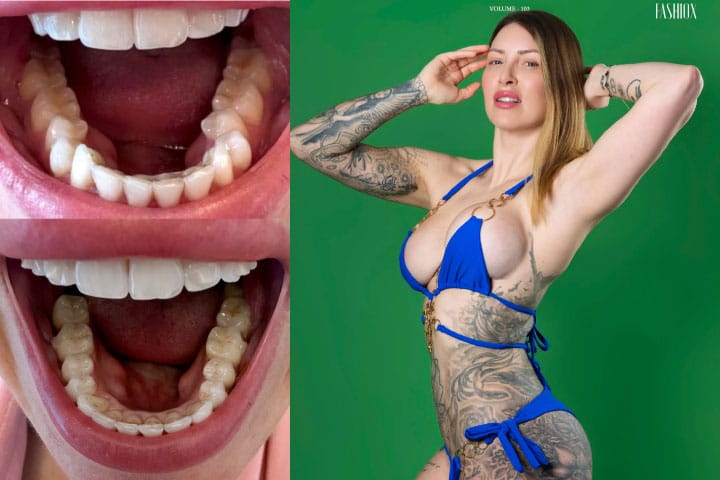
It goes to show that if a camera doesn’t pick it up, nobody would ever know that you are silently straightening your teeth with clear aligners, and it’s a million times better experience than fixed adult braces in my opinion. Looking back at how my teeth were slanting inwards before my treatment, it’s shocking to see how straight and upright my teeth are now, in such a short space of time. I’m absolutely over the moon with my results and cannot recommend it more highly for a healthy, natural smile.
Speaking with the dental team in Turkey via Whatsapp, I’ve been able to keep them updated on my progress throughout and ask any questions should I need to. I popped them a message this morning to inform them of beginning my final tray, as well as to share my progress photos and have been advised that once I’ve worn my final tray for 10 days, just like the previous 21 trays, I must then switch to an enhancer tray for three months to allow my teeth to set firmly into their final position before I return to Turkey.
This means that I’ve begun my countdown to my return, and I’m so excited to have my final wisdom tooth removed, the eight retainer squares that are fixed on my teeth taken off, my teeth whitened and retouched where necessary, and my nighttime retainers provided to keep my lovely straight teeth in place permanently.
I’m also going to be accompanied by my 18yr old daughter upon my return, as she will be having a natural breast reduction surgery and dentistry, whilst I have my dentistry treatment completed. Having a large bust that leaves her feeling uncomfortable with back pain, she has wanted to have a breast reduction surgery since her early teens and is now finally old enough to do so.
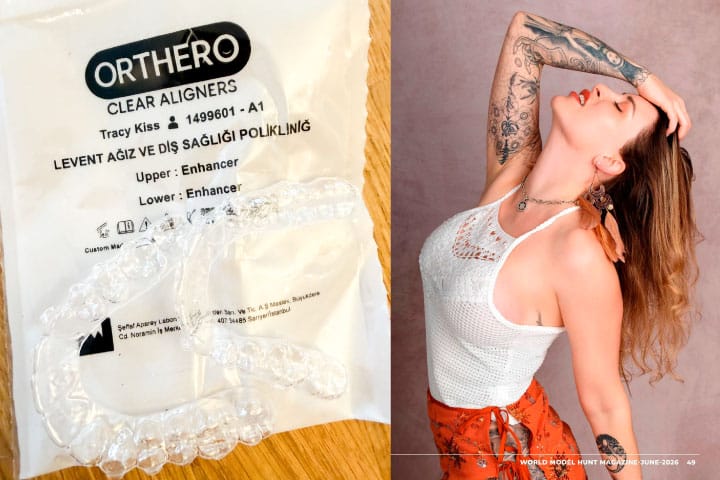
I am so thankful to be able to accompany her to her surgery, to be there by her side throughout and guide her through her recovery after we return to England together. The Cosmedica team have always been so fantastic with my procedures, aftercare and planning and I know that my daughter is in the very best hands for expert treatment and results for her own surgical journey.
So, join us for our mother-daughter trip to Istanbul in three months time. Wishing you all a very happy and healthy summer x
Returning To Istanbul To Complete My Dentistry
What a wonderful week it has been in Istanbul, as I returned to Cosmedica Dental to have my teeth aligners removed and my final wisdom tooth extracted. It was gloriously sunny, as the temperatures dropped in the UK, and a lovely little getaway with my daughter as she recovered from her breast reduction surgery.
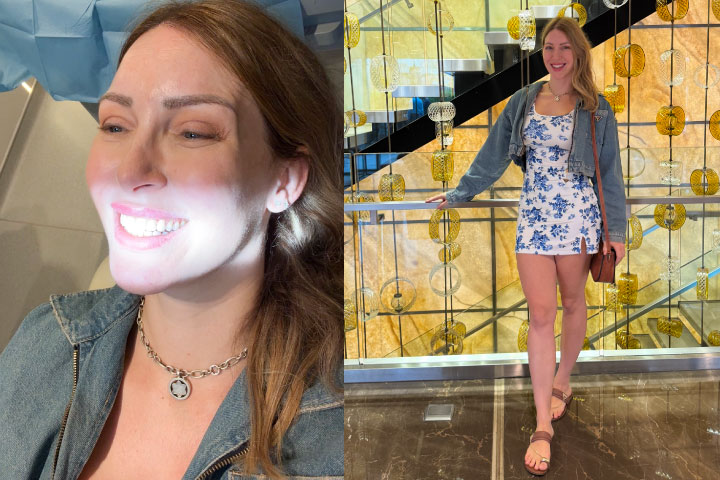
My fourth and final wisdom tooth popped out in seconds with local anaesthetic injections to my gums and cheek, without any sedation. Having had my other three wisdom teeth removed at once last time, I like to think that I know what to expect and how my recovery will go, as it’s simply a case of rinse and repeat for this last one.
Within 5-10mins my wisdom tooth was merrily sitting on the tray in front of me as I lay in the dentist chair, and I was given an ice pack, antibiotics and pain relief to take for the week ahead. My gum was stitched closed, which I didn’t feel as my mouth was so numb, and the squares removed from my teeth as I no longer need my daytime aligners.
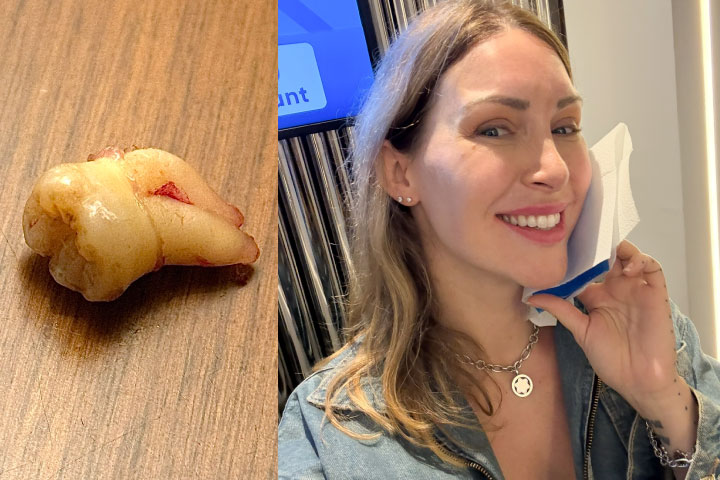
I am over the moon with my results and can’t believe how much space I have in my mouth, as my lower teeth are no longer falling over or leaning in on themselves, and everything feels so smooth, shiny and fresh.
I also had composite bonding to my front teeth where I have previously chipped my teeth in my sleep from grinding due to stress. Replacing the bonding allowed for a smooth and flawless finish to my teeth, which looks so natural and undetectable to hide past damage.
And the final step was to have my teeth scanned so that my new night time retainers could be custom made and fitted. This involved passing a camera device around the jawline to create a 3D image of the shape, size and placement of my teeth so that an exact retainer replica could be made and keep my teeth in place, forever.
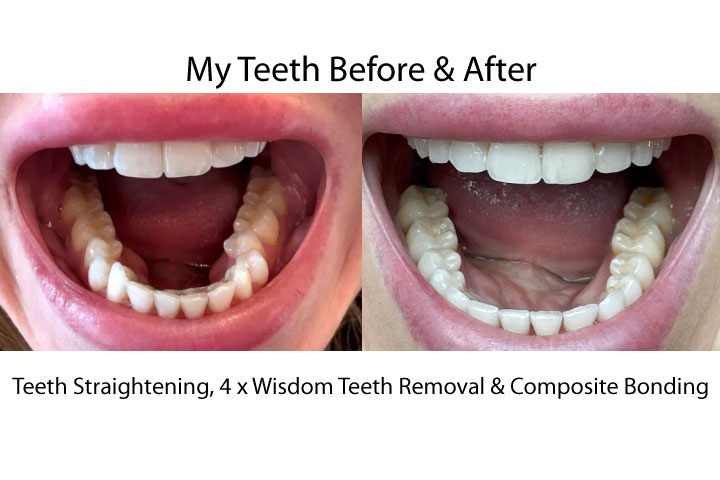
I only need to wear my night time retainers at night now, and no longer need to pop them in and out for food or drinks throughout the day, and it’s so strange to think that just as quickly as my teeth straightening was fitted, it is now complete and has been removed!
During my stay in Turkey, I returned back to the clinic to have my night time retainers fit-checked and the stitches in my gum removed so that I could fly home. It’s individual preference as to whether you leave stitches in to dissolve naturally by themselves at home over the coming weeks, or have them removed by the dentist before you leave.
As my gum was healing beautifully, I was advised the stitched could be snipped out before my flight for convenience, and so I accepted. It was all so quick, easy and pain free and has given me such peace of mind over my future oral health by knowing that I’ve taken preventative steps to preserving my healthy, natural teeth.
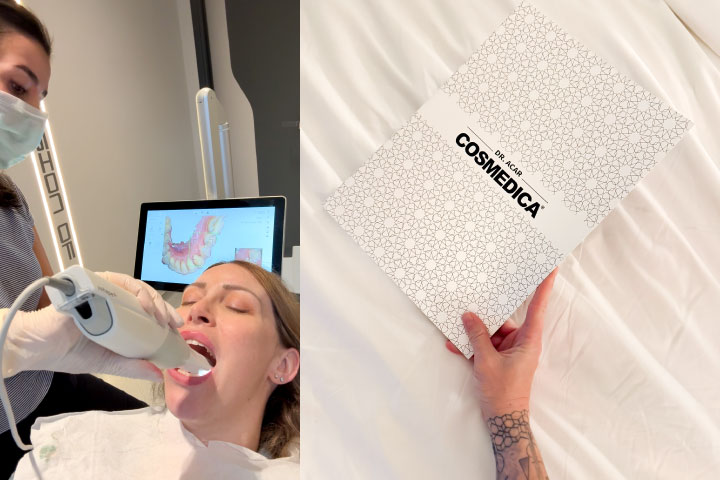
Since posting my results online to my social media, so many people have got in touch with me to tell me their horror stories of NHS dentistry in the UK which left them with broken fragments, nerve damage and even loss of taste due to failing wisdom teeth!
If I can give anyone advice about dentistry, I would recommend that you seek expert care before anything goes majorly wrong and not wait to be in immense pain and suffering first. Not every dentist in the UK has your longterm oral health interests at heart, as many sadly profit financially from providing fillings, root canals and appointments that can all be prevented by moving troublesome wisdom teeth that do not cause you any pain at present.
Having this freedom of choice in the UK should be given to everyone, yet even as a paying customer at my dentist that I have been a member with for decades, I was refused elective wisdom teeth extraction and only allowed to address treatments after waiting for my teeth to eventually rot, for which extraction would be the last resort after a costly and painful process of all other avenues from fillings to root canals which I wanted to prevent.
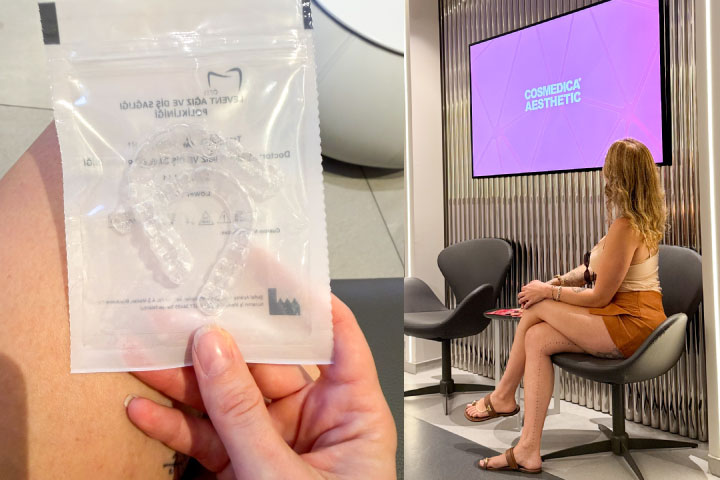
Therefore, a lot can be said for travelling outside of the UK to seek a specialist dentist that has your health and wellbeing at heart, rather than being viewed as a lifelong cash cow where your dental decline is their inevitable financial gain.
I cannot recommend Cosmedica Dental more highly for their expertise, care and ease of treatment. It has been, by far, the most comfortable, affordable and exceptional treatment and natural results that I have ever experienced. I will certainly return for all and any future dental requirements over that of local dentistry in England, because my results truly speak for themselves.
